
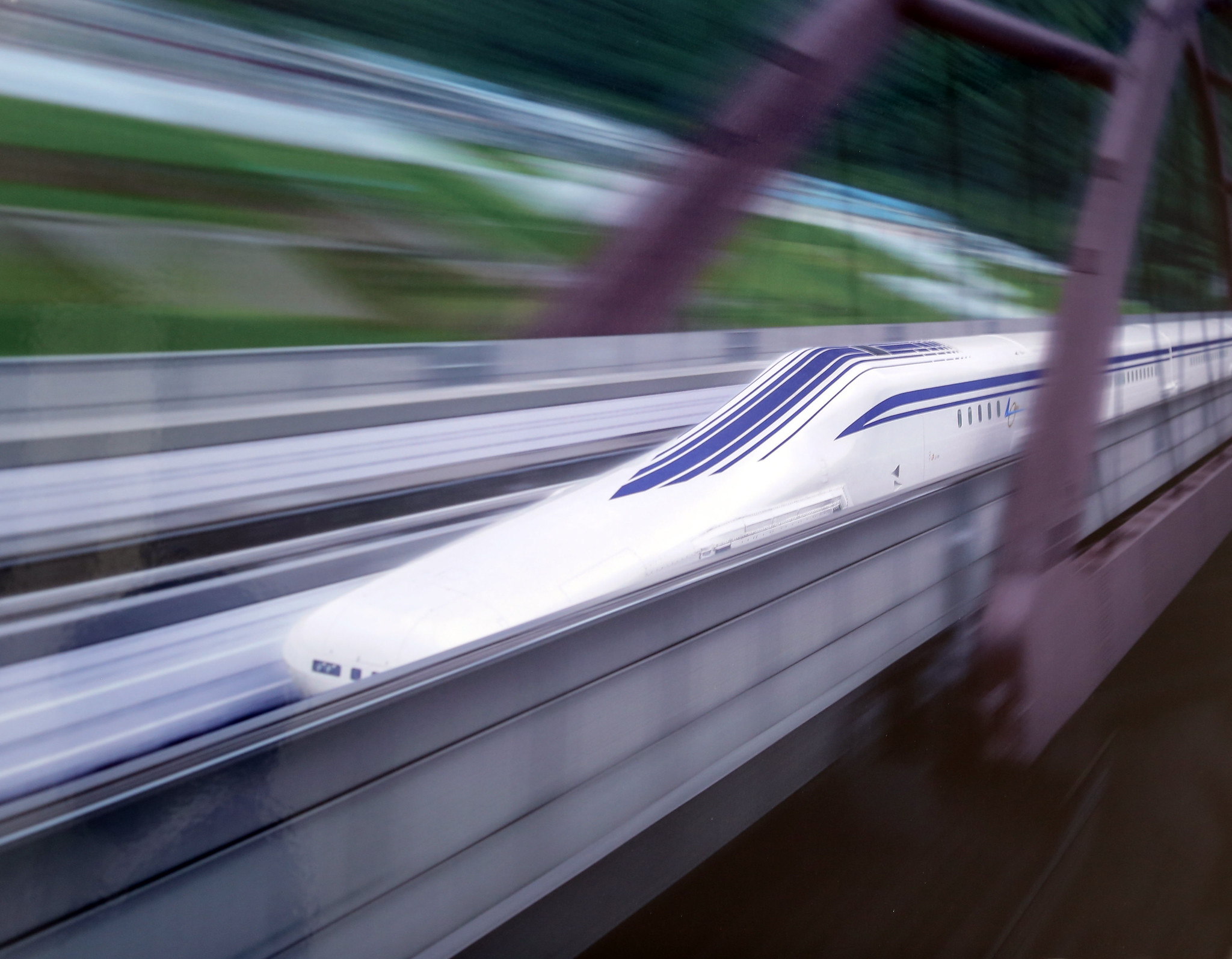
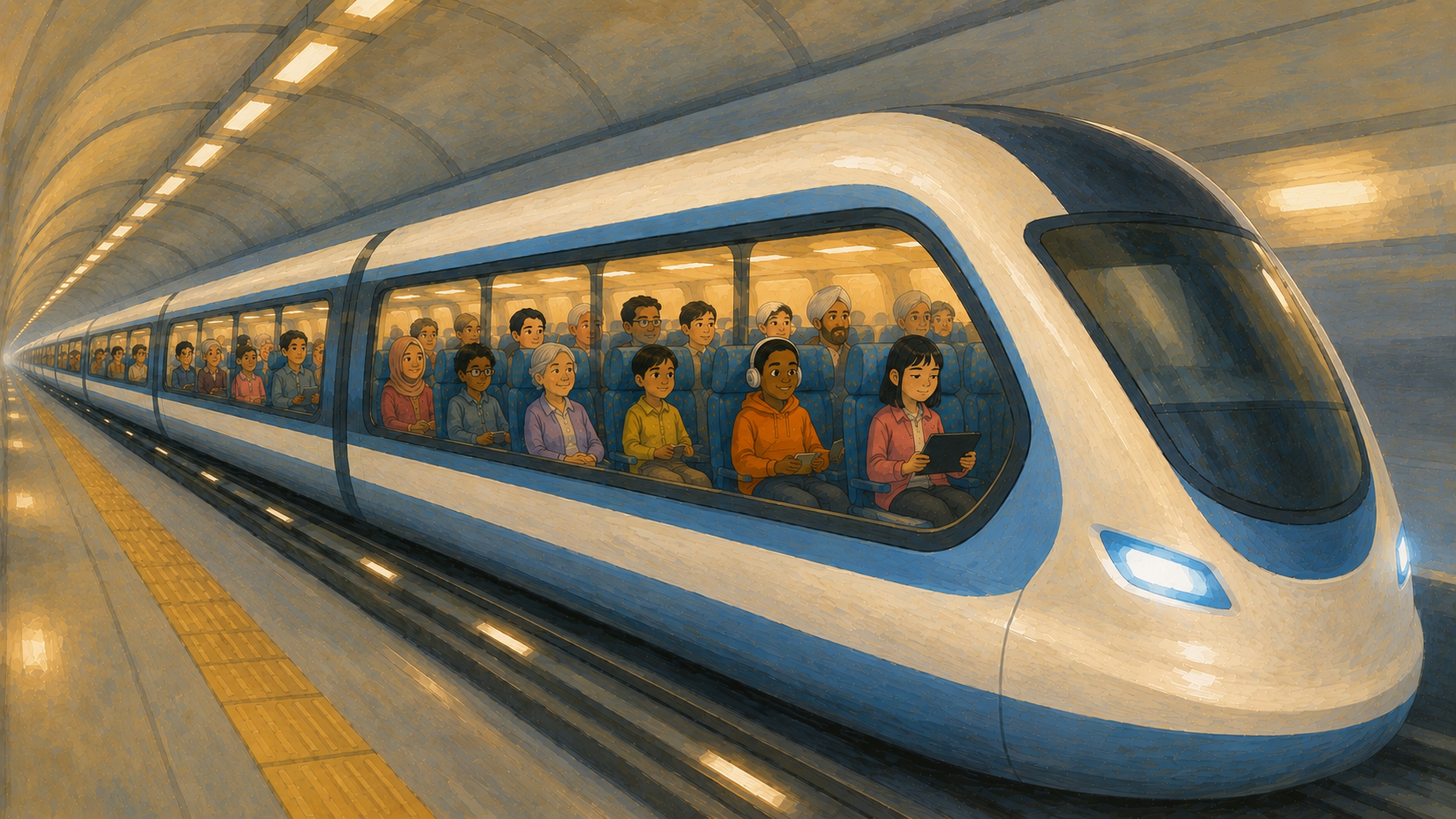
You’ve chosen to imagine racing through underground tubes on a lightning-fast train. You might want to learn more about vacuum-tube trains, which use maglev and low-pressure tunnels to reduce resistance. Just don’t get vacuumed up along the way!
This scenario explores vacuum-tube trains, sometimes called vactrains. They often combine two ideas to help us move very fast. First, magnets lift a vehicle so it does not roll on wheels; second, low-pressure tubes remove much of the air pushing against it. China, India, and Europe now have real test tracks for this idea. These systems are still experiments, not everyday passenger trains. And when you do take your first vacuum-tube train ride, don’t get vacuumed up along the way!
What might change if a long trip suddenly became much shorter?
Build your own vacuum-tube train system using cardboard tubes, paper, straws, tape, and a small paper train. Design a tunnel and two stations, then add symbols showing where magnets could lift the train and pumps could remove air. Add emergency exits, accessible entrances, or any other feature you think riders would need.
With an adult, ask ChatGPT:
“Invent three ways a vacuum-tube train could connect two cities safely and fairly.”
Choose the ideas you like, change anything you don’t, and draw a map showing your train, tunnels, stations, and who might use them.
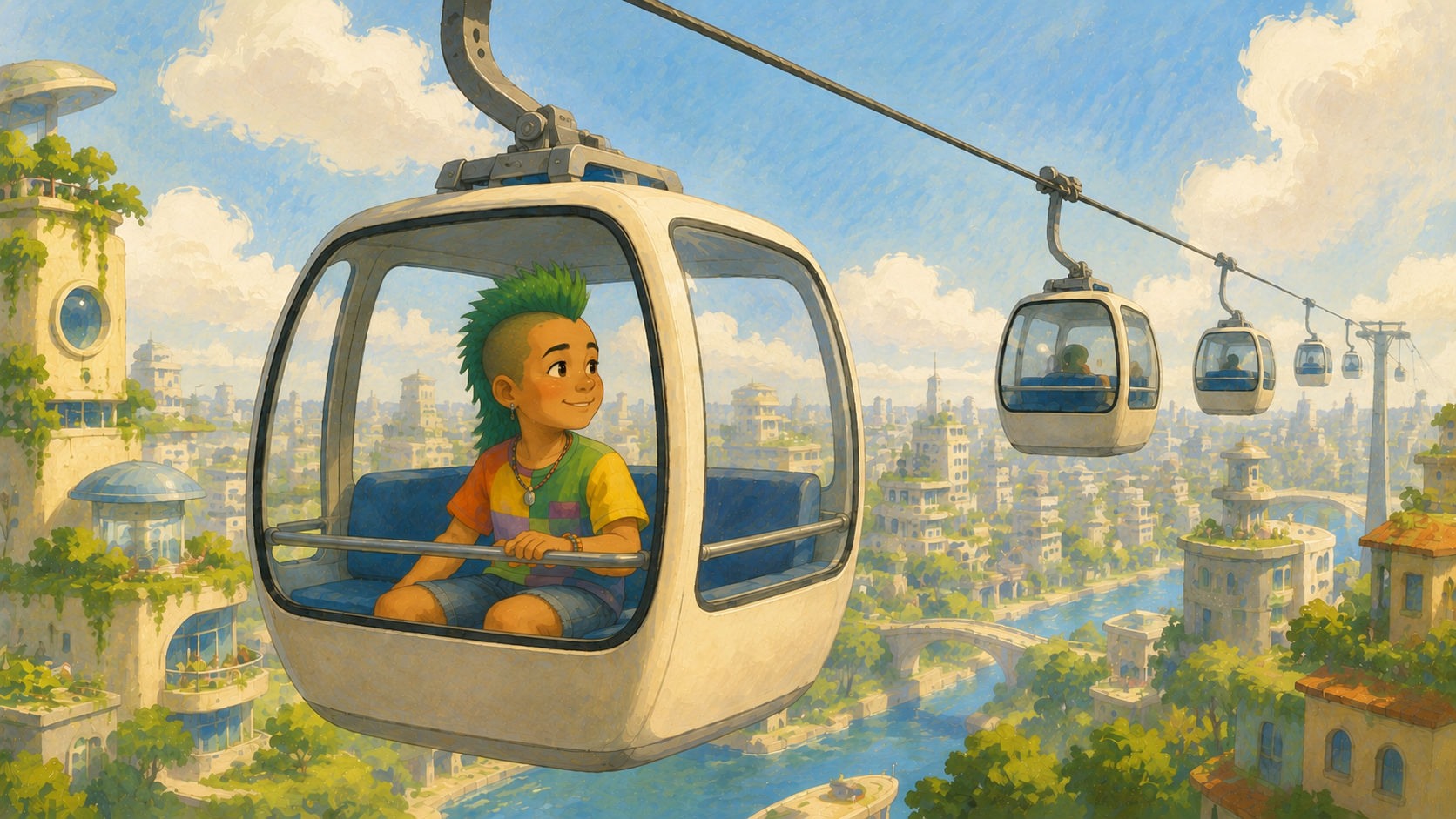
You’ve chosen to imagine gliding above the city in a cable car with giant windows. You might want to learn more about urban cable cars, which carry everyday riders above hills, roads, and traffic. But remember, you might want to leave the window closed when you’re at 8,000 feet of altitude!
This scenario explores urban cable cars, gondolas used as everyday public transportation. In cities like La Paz and Bogotá, these cable cars already carry people above steep hills, rivers, roads, and traffic for daily trips. They required much less ground space compared with many roads or railways and they can connect neighborhoods that are difficult to reach by bus. Of course, cities still must plan fares, stations, privacy, and access carefully. And you might want to close the window when you’re at 8,000 feet of altitude!
Who might benefit most from a cable car over a steep neighborhood?
Make your own city cable car using string, a paper cup or folded paper, tape, and two chairs or boxes. Stretch the string between two “neighborhoods” and create a tiny cabin that can slide along it. Add stations, then redesign your route so people with different needs can easily reach and ride it.
With an adult, ask ChatGPT:
“Design three cable-car routes for a hilly city, each helping different riders.”
Choose one route and make your own transit map. Add stations, connections to buses or trains, and any features that make your system easier for everyone to use.


.png)
.png)