
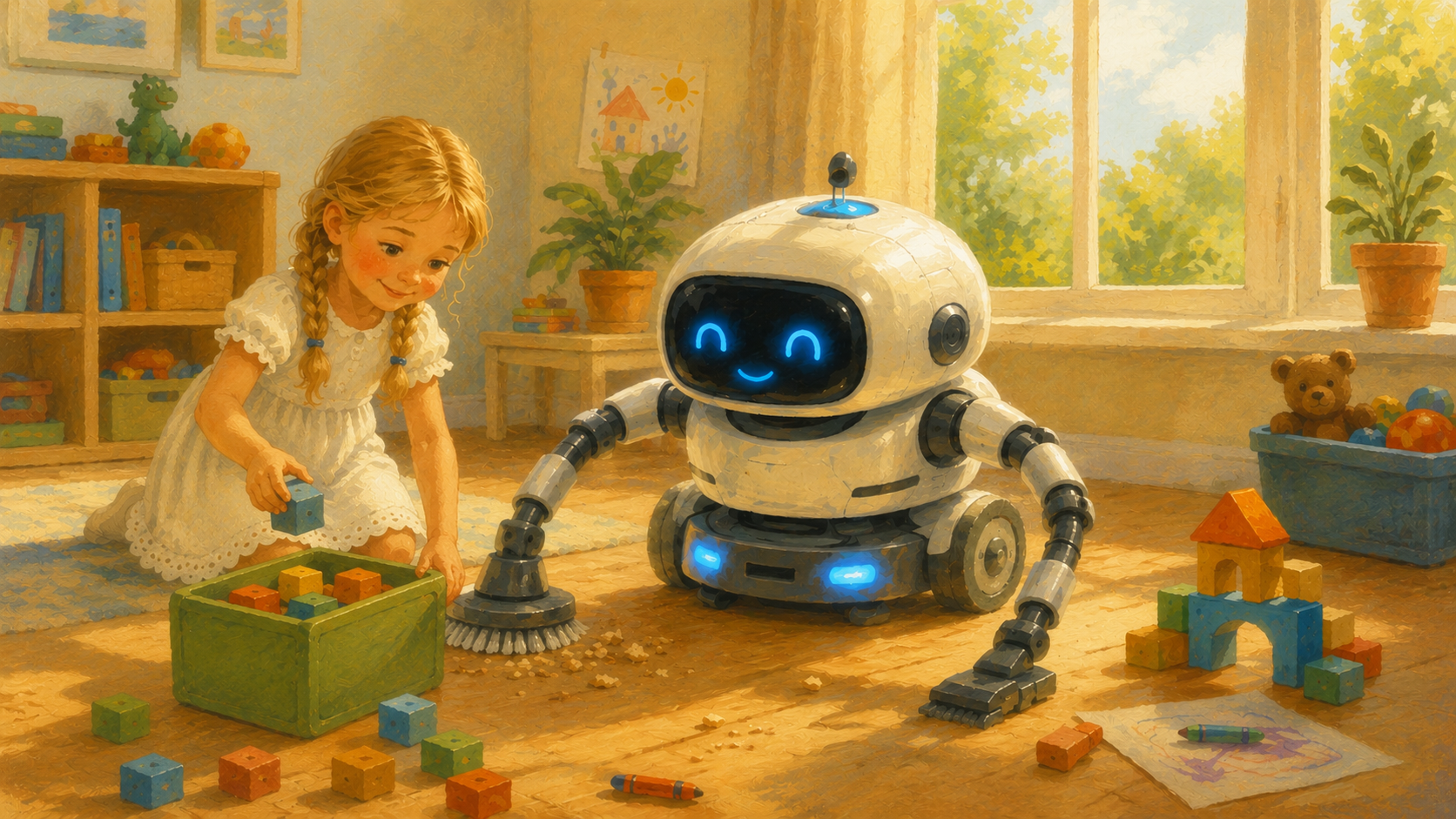
You’ve chosen to imagine a robot that can clean up any mess in 50 seconds. You might want to learn more about home helper robots, which use sensors and software to handle chores around a house. But you’re not allowed to get angry if your home helper robot accidentally vacuums up your homework!
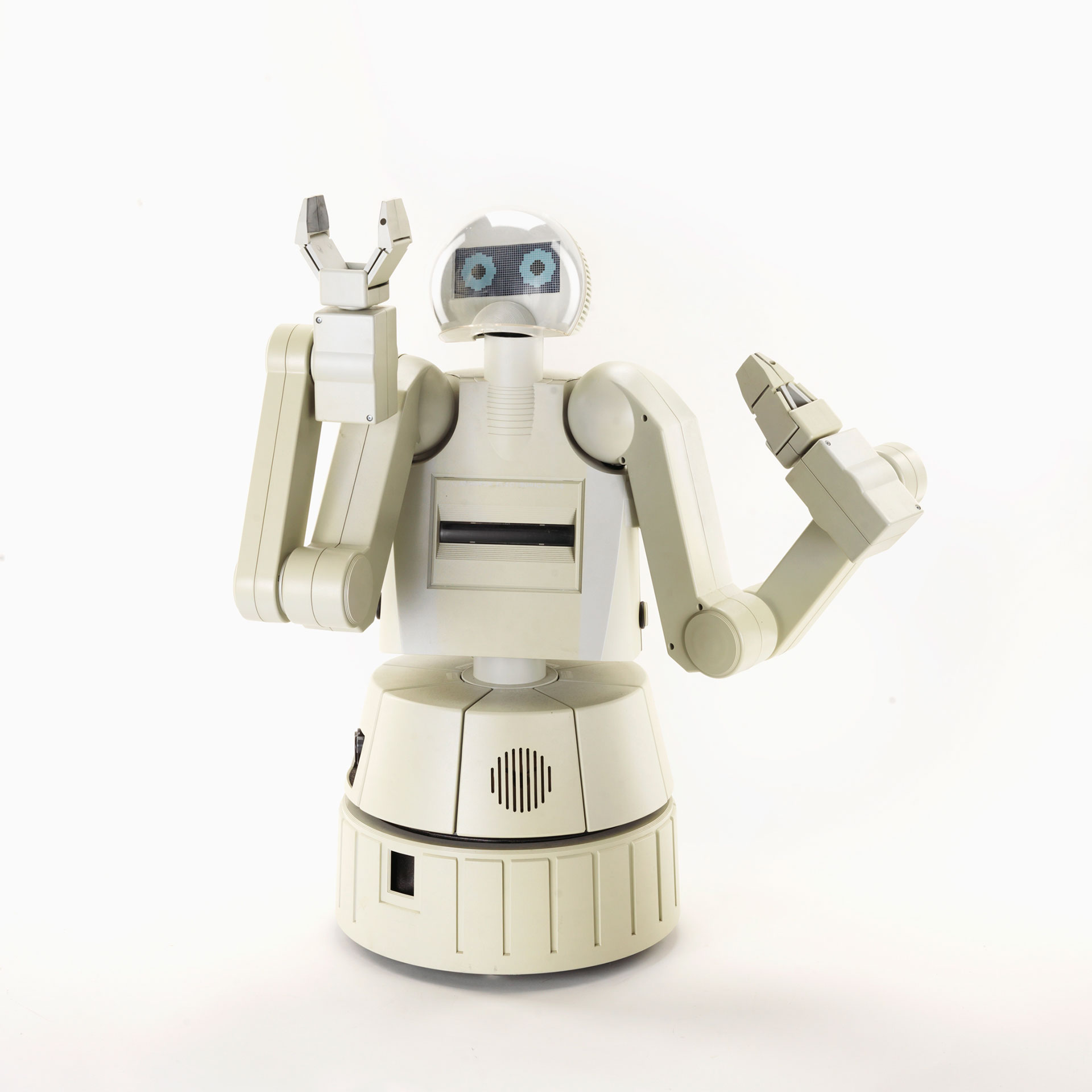
We’ve decided to discover more about home helper robots, machines built to handle everyday household chores. Some already vacuum, mop, fold laundry, and move things for us. For example, Matic uses cameras to steer around toys, cables, rugs, and pets—and Tau sends humanoid cleaners into real San Francisco homes today. But those robots still need remote human operators during each cleaning visit, which means we must decide what robots can see inside our homes. And remember, you’re not allowed to get angry if your home helper robot accidentally vacuums up your homework!
If cleaning robots became common, how might they change life for families and workers?
Build your own home helper robot using a small box, cardboard, bottle caps, tape, and recycled materials. Give it tools for two different chores, then add pretend sensors that help it notice furniture, pets, or messy floors. Create one “robot-free zone” it must never enter and redesign your robot until it can handle your imagined home.
With an adult, ask ChatGPT:
“Invent three home helper robots that clean in completely different ways.”
Choose one idea, change anything you dislike, then draw or build your own version. Decide what it cleans, how it knows where to go, and what people must still do themselves.
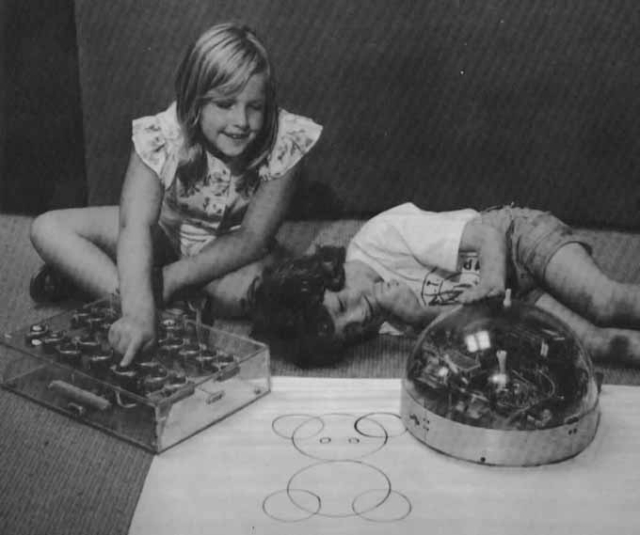
You’ve chosen to imagine a desktop robot homework helper that helps you understand any assignment. You might want to learn more about autonomous robot lamps, which can sense, move, and respond beside you. Your robot can explain fractions, but you still have to do the worksheet!
We’re exploring autonomous robot lamps, moving lights that can sense and respond. Some can follow our hands, turn toward us, or react with movement, using expressive motion during interactions. Separate learning software could give hints, ask questions, or adapt an activity to a student’s progress. These tools could guide our thinking without simply giving us answers, but we would need strict rules about privacy, accuracy, and who controls the work. And don’t get too carried away with your desktop robot. It can explain the fractions, but you still have to do the worksheet!
Where is the line between getting robot help and letting it do your work?
Build a tiny homework-helper lamp using cardboard, paper fasteners, paper cups, tape, and craft materials. Make its “head” move so it can point toward a book or worksheet. Add four help buttons, such as “give me a hint,” “show an example,” “ask me a question,” and “take a break,” then invent another way your helper could support learning without doing the work for you.
With an adult, ask ChatGPT:
“Pretend you are a friendly robot homework helper. Give me hints and questions, but never give me the answer.”
Try it with a pretend math, science, or reading problem. Then design your own robot helper and decide what it should do when you are confused, frustrated, or ready for a harder challenge.


.png)
.png)