
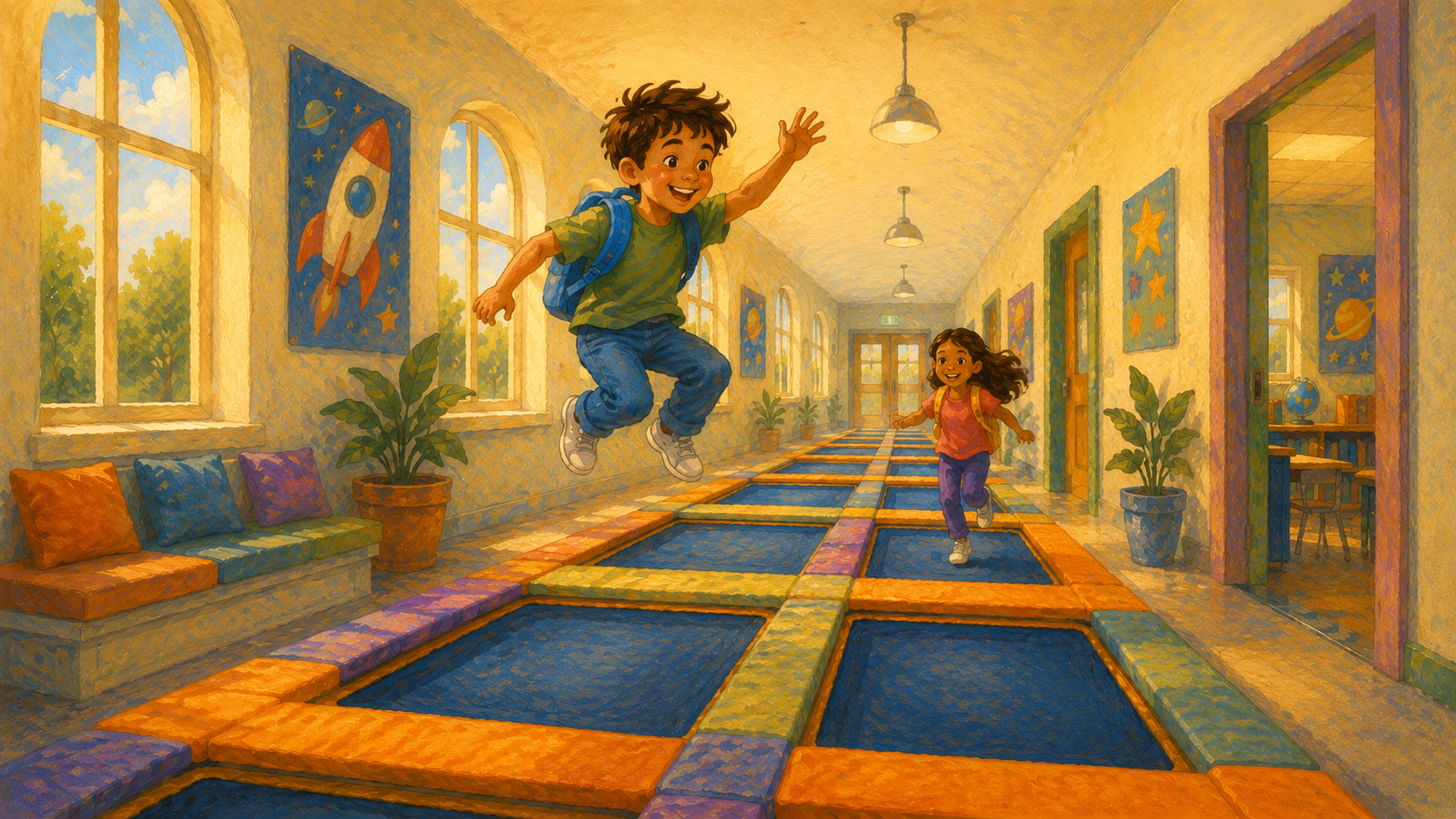
You’ve chosen to imagine a school where hallways double as places to bounce, move, and play. You might want to learn more about active spaces, which could encourage movement and build well-being into places we use every day. But be careful; your teacher may need a “no bouncing into class” rule!
We spend lots of our school day moving from place to place. What if our hallways helped us move, play, and feel good? Active spaces build movement into places we already use each day. Some schools even use floors that make electricity from our steps. Future hallways could help our bodies while serving another purpose, too. But be careful; your teacher may need a “no bouncing into class” rule!
If hallways became places for movement and play, how could we make sure they stay safe, too?
Design a hallway that does more than help people get somewhere. Use cardboard, paper, craft sticks, string, sponges, and other materials to build a model with places to bounce, balance, stretch, or move. Add one feature that uses all that movement for another purpose, like making electricity.
With an adult, ask ChatGPT:
“Imagine five ways a school hallway could help kids move and play.”
Choose your favorite idea, then change it to make it your own. Draw your new hallway and show how kids would move through it.
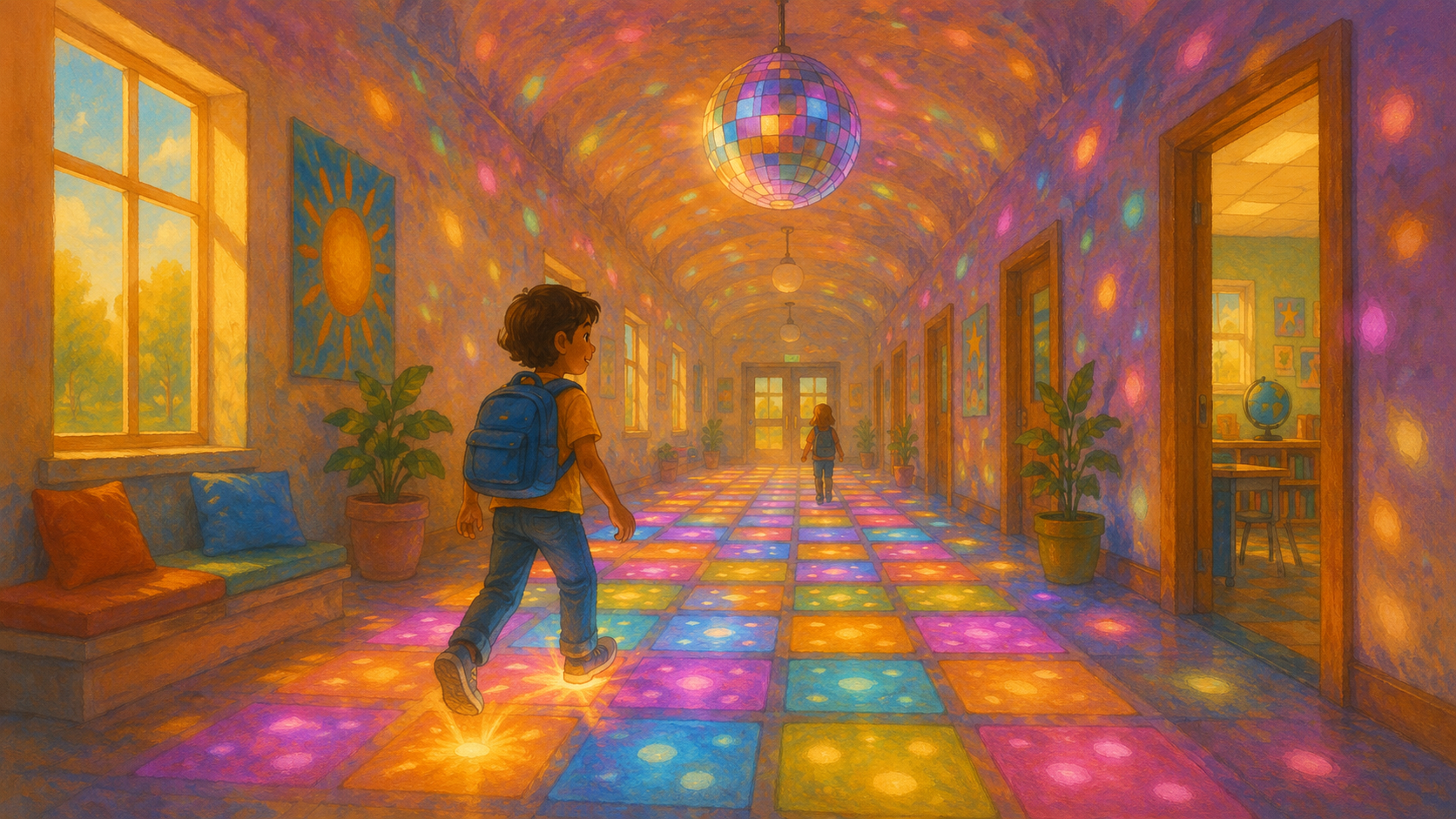
You’ve chosen to imagine a school where the hallways fill with changing lights and music as you walk. You might want to learn more about sensory spaces, which use things like light, sound, and color to shape how a place feels. Who says Monday morning is too early for a hallway dance party?
Our surroundings can change how a place feels. Sensory spaces use light, sound, color, and movement in thoughtful ways. Some spaces help us feel calm, while others invite us to play. Music can also help us notice and explore different feelings. Future schools could let us choose spaces that fit what we need. Who says Monday morning is too early for a hallway dance party?
How could we design a hallway that feels fun without making it uncomfortable for others?
Create a mini sensory hallway inside a shoebox or cardboard box. Use colored paper, shiny materials, textured surfaces, and drawings of lights or speakers to show how the hallway could change. Design different parts for different feelings, such as an energetic zone and a quiet zone.
With an adult, ask ChatGPT:
“Design three school hallways for different moods: energetic, calm, and focused.”
Compare what changes in each space. Then draw your favorite version or combine parts of all three into a hallway that can change throughout the day.


.png)
.png)