

You’ve chosen to imagine a suit that lets your body feel different planets’ gravity. You might want to learn more about partial-gravity simulation, which shows us what it would feel like to move around in lower or higher gravity. Other simulation suits, like age-simulation suits, help us feel some physical challenges another person may face. Just remember: a simulation is a sneak peek, not a mind-reading cape!
We’re exploring partial-gravity simulation—methods like NASA’s reduced-gravity training systems that help people practice moving as if they weighed less or more than they do on Earth. Age-simulation suits provide a different kind of perspective by restricting selected movements or senses. For example, MIT’s AGNES suit can limit vision, strength, flexibility, and hand movement. A future gravity suit might imitate movement on the Moon or Mars, but no suit could reproduce every effect of living there. A simulation is a sneak peek, not a mind-reading cape!
How could a gravity suit help us understand how different bodies move?
Design a gravity suit without adding real weights. Use cardboard, paper, tape, yarn, and an old shirt or paper figure. Add controls for Earth, Moon, Mars, and other gravity settings. Invent what each setting changes, then redesign your suit to keep its wearer safe and comfortable.
With an adult, ask ChatGPT:
“Design three safe ways a gravity suit could simulate movement on the Moon, Mars, and Jupiter.”
Choose the ideas you like, change anything you don’t, and draw your own control panel. You can also build a cardboard model showing how someone switches between different gravity settings.
You’ve chosen to imagine a suit with a jetpack that lets you fly and steer. You might want to learn more about maneuvering units, small thrusters astronauts have used to move through space. Just remember to hit the brakes before you get too far from Earth!
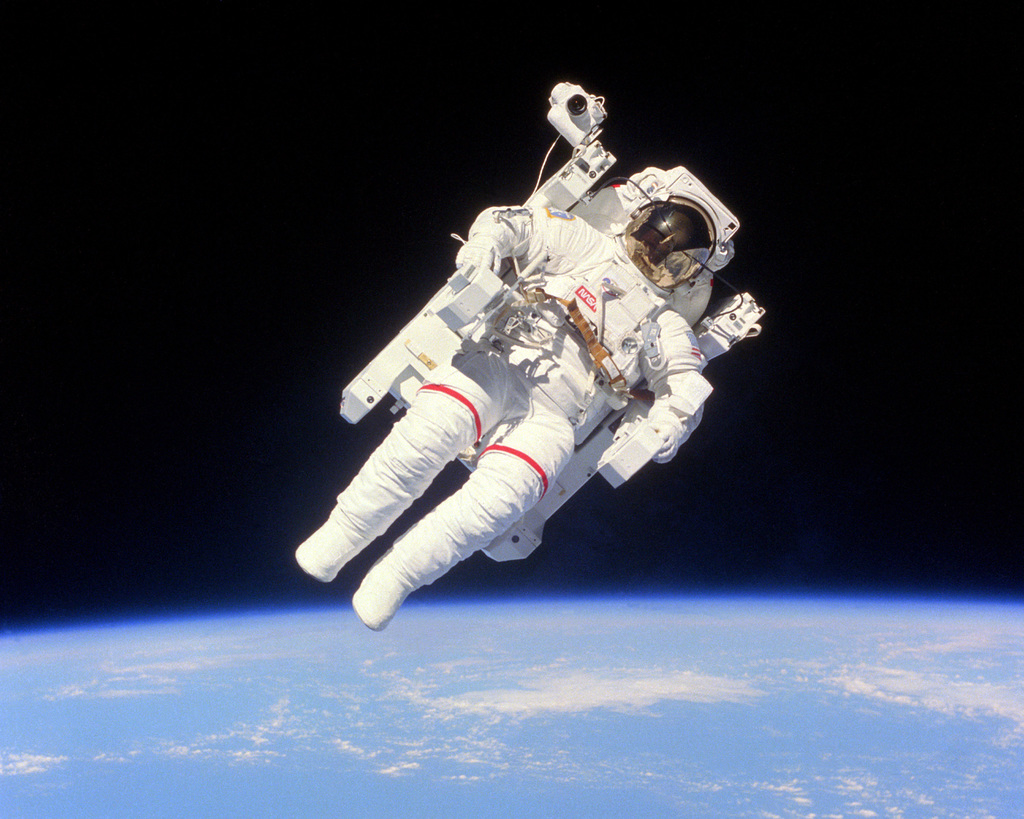
We’re exploring maneuvering units, thruster systems for steering in space that work by pushing an astronaut in different directions. NASA’s old MMU let astronauts fly untethered from the shuttle. Today, astronauts wear a smaller SAFER pack for emergency rescue. Earth jet suits show personal flight can happen outside space, too. Future versions would need careful rules for safe shared skies. And friendly reminder: don’t forget to hit the brakes before you get too far from Earth!
Who should decide where people are allowed to fly with jetpacks?
Build a safe model jetpack suit from cardboard, paper cups, tubes, foil, tape, and string. Add pretend steering controls, thrusters, and a landing system. Then make a paper figure to wear it and redesign one part to make flying safer, quieter, or easier to control.
With an adult, ask ChatGPT:
“Invent a safe jetpack suit for a kid living in a future city.”
Look at how it takes off, steers, lands, and avoids other flyers. Then draw your own version, change the features you dislike, and invent a completely different way to fly.




.png)
.png)