

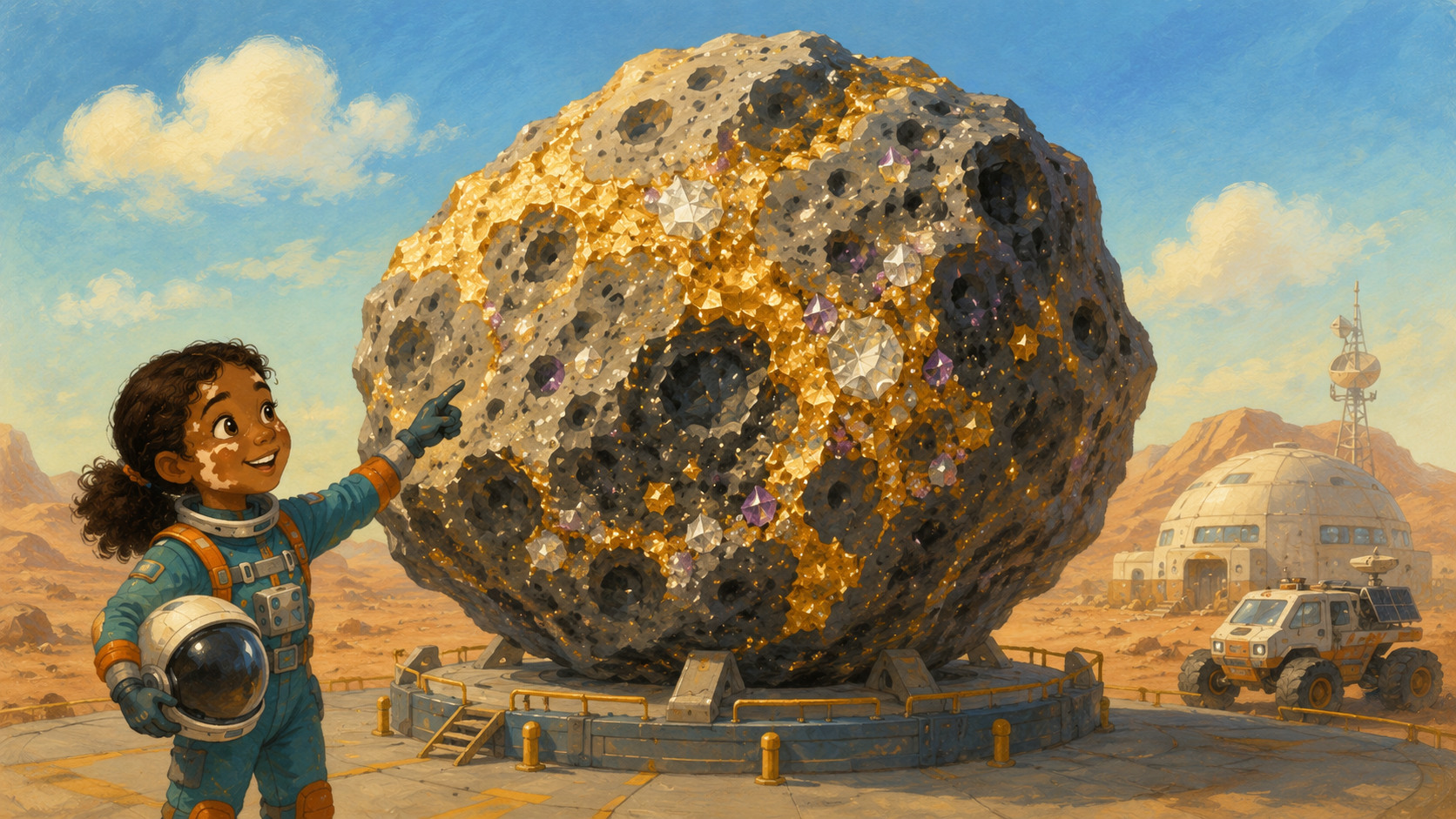
You’ve chosen to imagine discovering an asteroid packed with useful materials far from Earth. You might want to learn more about asteroid mining, which explores ways to collect water and minerals from space rocks. But remember to save some space rocks for space!
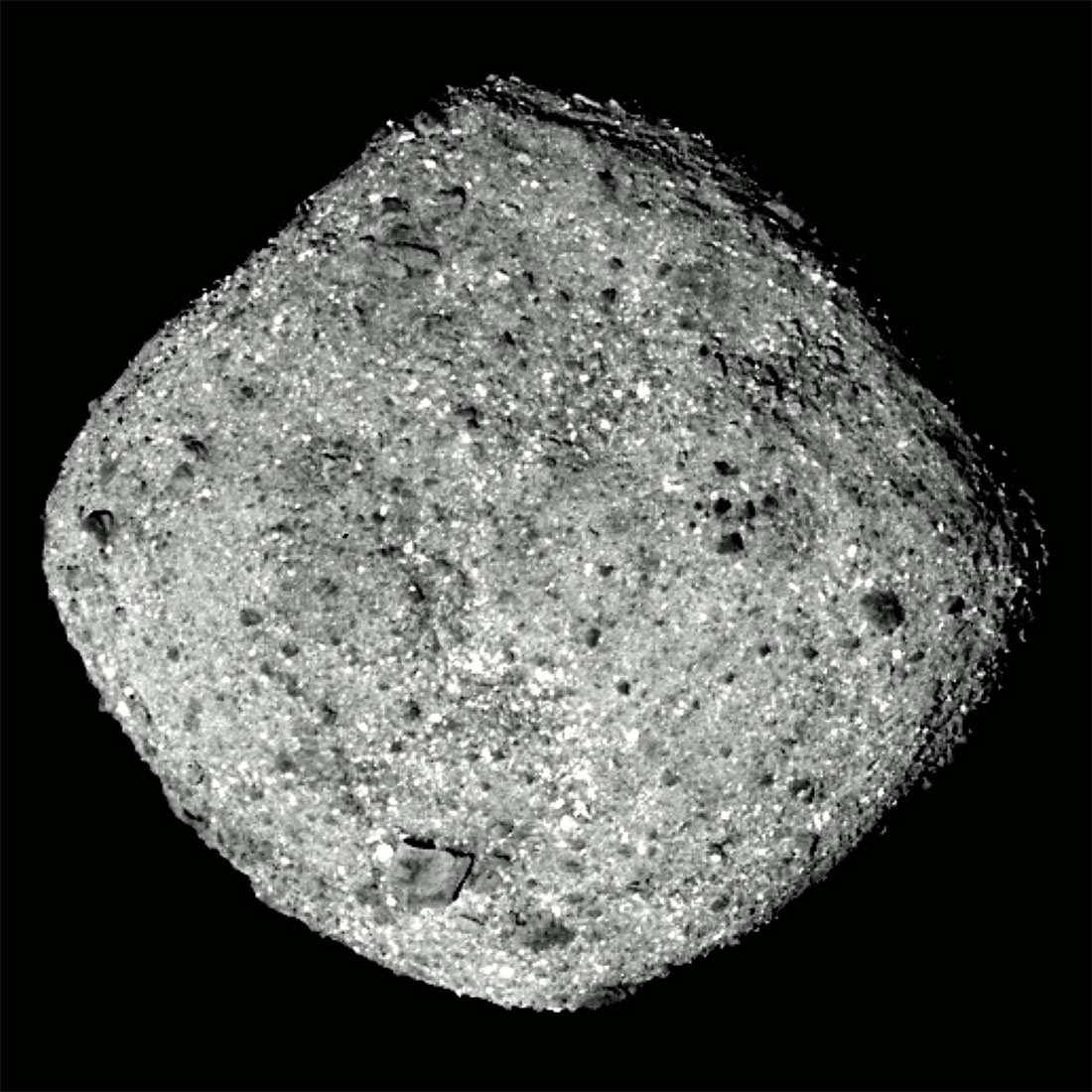
We’re exploring asteroid mining, or getting useful materials from space rocks. Some asteroids contain metals, while others hold water-rich minerals. We already collect tiny asteroid samples and study new ways to extract resources. Mining an asteroid at a large scale would still require major advances in robotics, transportation, processing, economics, and international governance. So we would still need to make thoughtful choices about how resources are used—and save some space rocks for space!
Should anyone be allowed to claim an asteroid as their own? Why or why not?
You can build an asteroid-mining machine using cardboard, foil, straws, cups, tape, and recycled materials. Crumple foil into an asteroid, then design one part that gathers rocks and another that stores your pretend resources. Test your machine, notice what is difficult, and change your design until it works better.
With an adult, ask ChatGPT:
“Invent three ways a robot could collect water and metal from an asteroid without breaking the whole asteroid apart.”
Choose the idea you like best, change anything you want, then draw or build your own asteroid-mining robot.
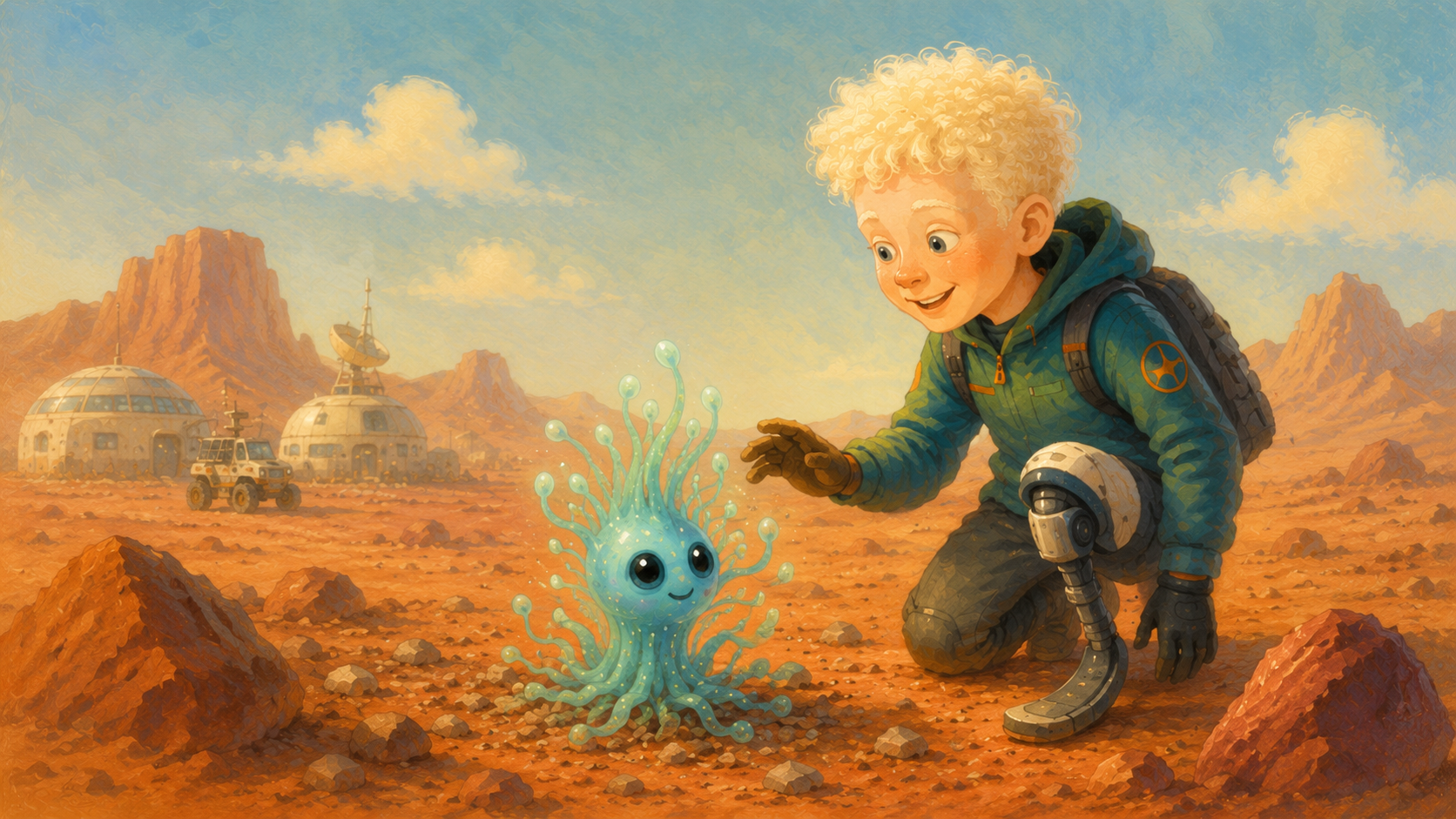
You’ve chosen to imagine discovering a completely new form of life on Mars. You might want to learn more about alien life science, or astrobiology, which studies how life begins, survives, and might exist beyond Earth. First rule of alien science: don’t squish the evidence with your space boot!
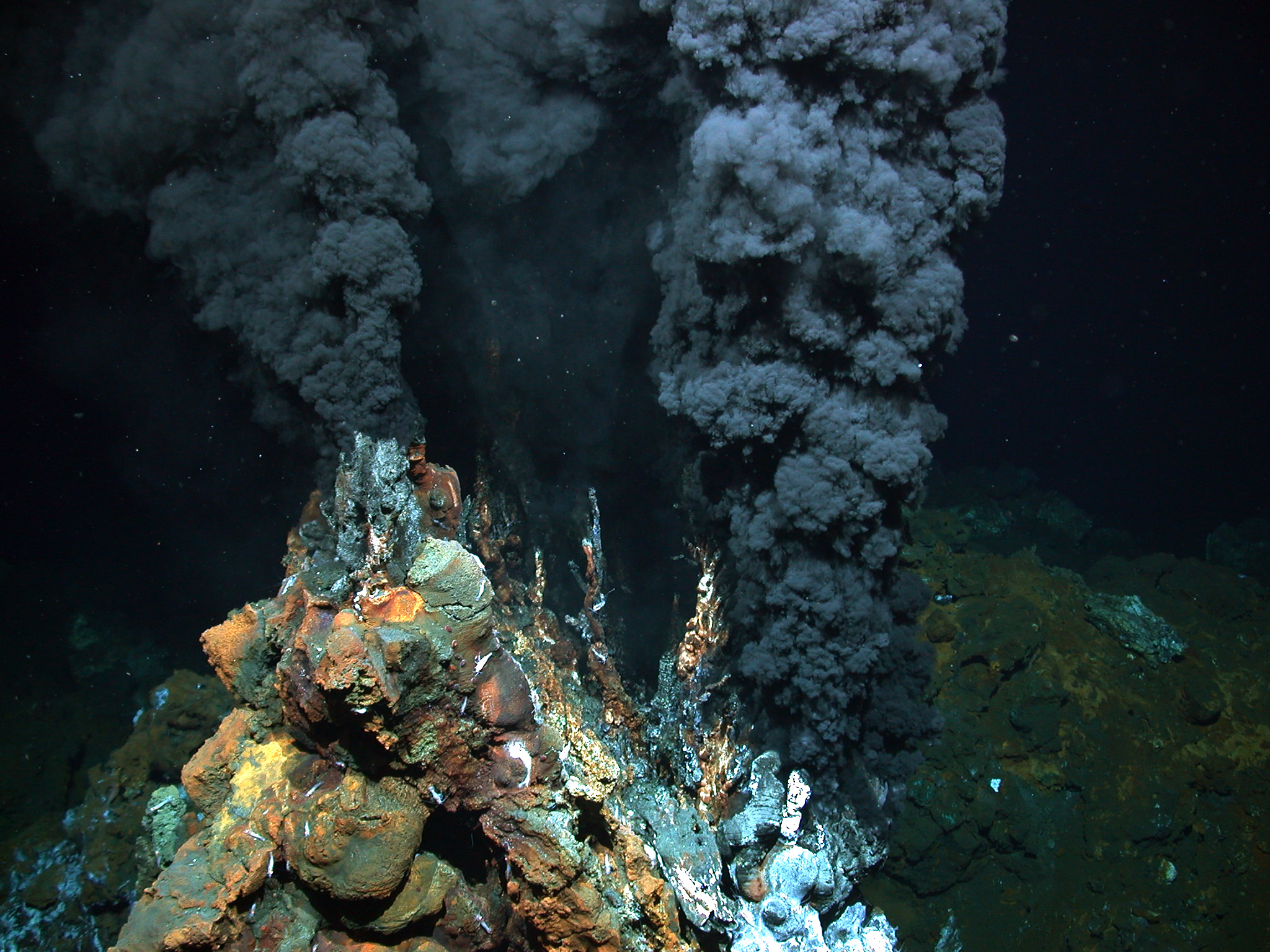
We’re exploring life in the universe, also called astrobiology. It asks what life needs and where else it could survive. Our Mars rovers search ancient rocks for clues left by possible life, while Earth’s toughest microbes show us that life can survive surprising places. A possible sign of life is called a biosignature, but every candidate requires careful testing before we know what it means. And always remember the first rule of alien science: don’t squish the evidence with your space boot!
How could our future change if Mars had life—or if it had none?
You can invent a Martian life-form using clay, paper, cardboard, foil, or recycled materials. Decide how your creature or tiny organism handles cold, dryness, and limited water. Build more than one version and change its body each time to test different survival ideas.
With an adult, ask ChatGPT:
“Imagine three very different life-forms that could survive on ancient Mars near a lake.”
Choose one idea as a starting point, then redesign it yourself. Draw or build your creature and show what it needs to survive.


.png)
.png)