
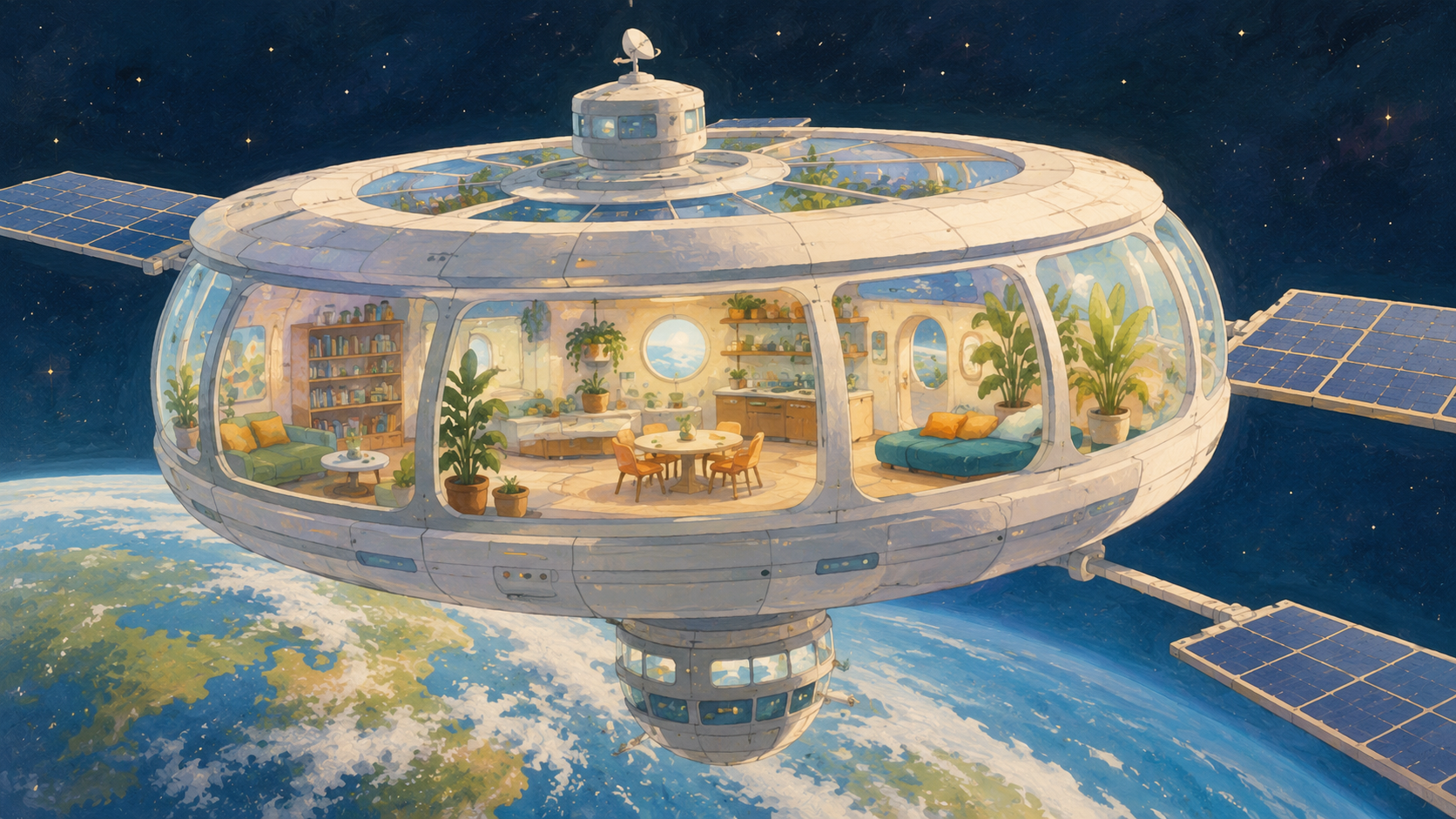
You’ve chosen to imagine a home floating around Earth on a zero-gravity space station. You might want to learn more about orbital habitats, where people live, work, eat, sleep, and play in space. Just don’t forget your tether when you leave the house for spacewalks!
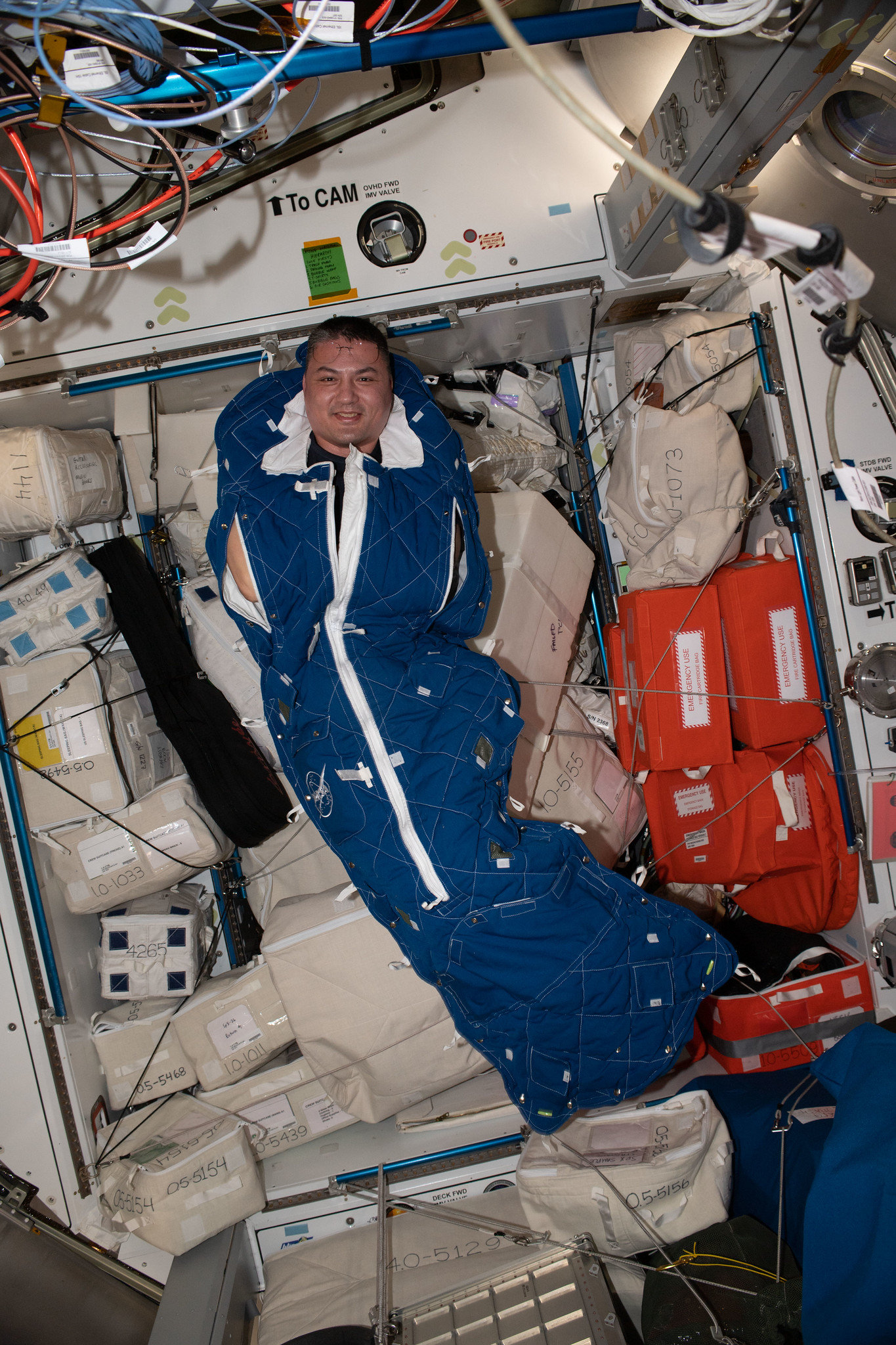
This scenario explores orbital habitats, where we could live and work around Earth. We can learn from astronauts already living aboard the International Space Station. Their work helps us understand food, water, sleep, and health in microgravity. Private astronaut trips also help us test new ways to visit space; NASA is even helping companies develop future commercial space stations. Just don’t forget your tether when you leave the house for spacewalks!
If families lived in orbit, how could they stay connected to people on Earth?
Build your own orbiting space home using a paper plate, cardboard, cups, tape, string, and recycled materials. Design places to sleep, eat, exercise, grow food, and look down at Earth. Imagine there is almost no gravity, then decide how you would stop your furniture and belongings from floating away.
With an adult, ask ChatGPT:
“Design a cozy space station home where a family could live in zero gravity.”
Choose the ideas you like, change anything you do not, and draw or build your own version. Add one completely new room that nobody has thought of yet.
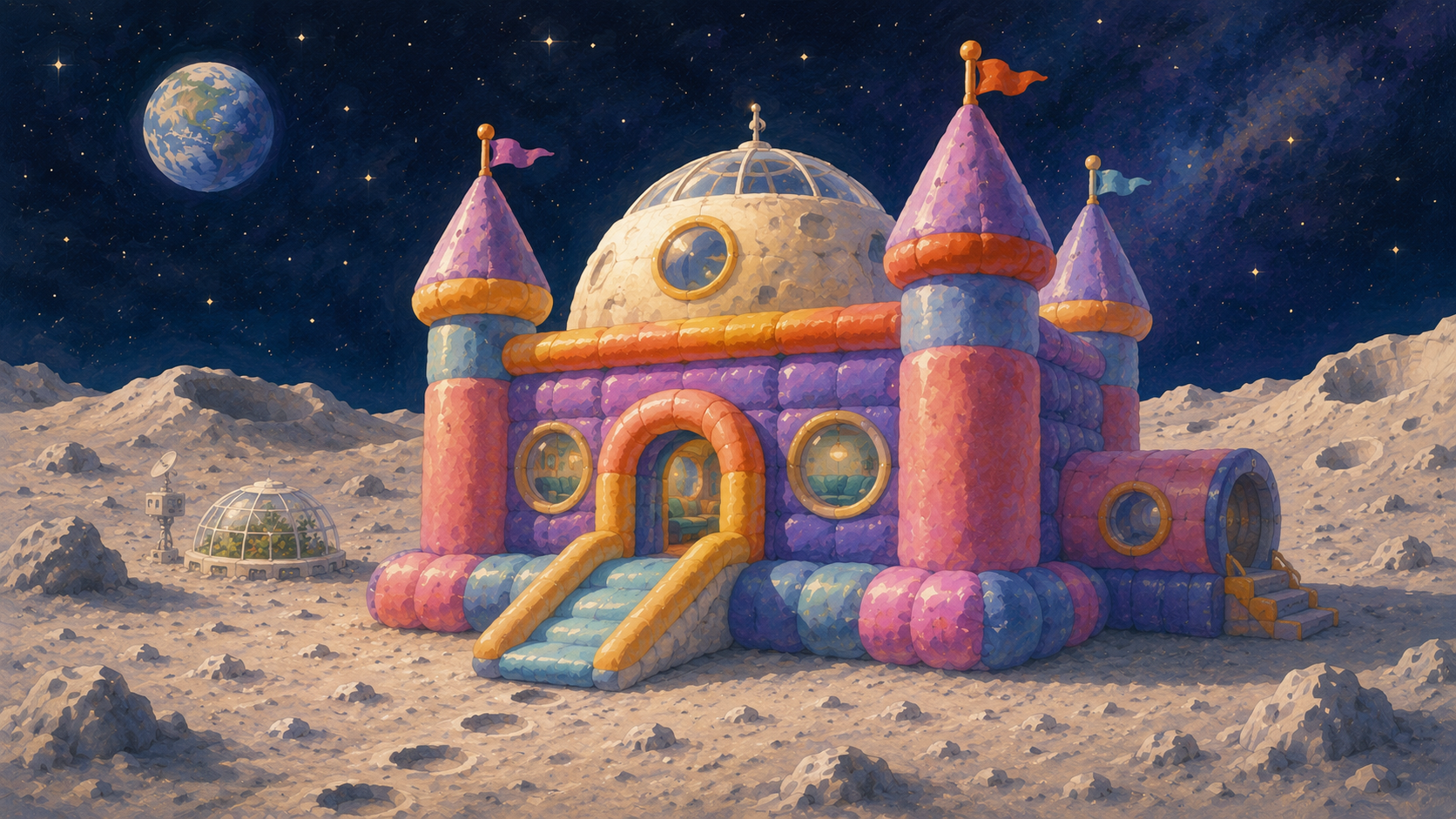
You’ve chosen to imagine a giant bouncy castle home built right on the Moon. You might want to learn more about lunar construction, which explores building with materials already found on the Moon. But don’t forget to save some Moon dust for the Moon!
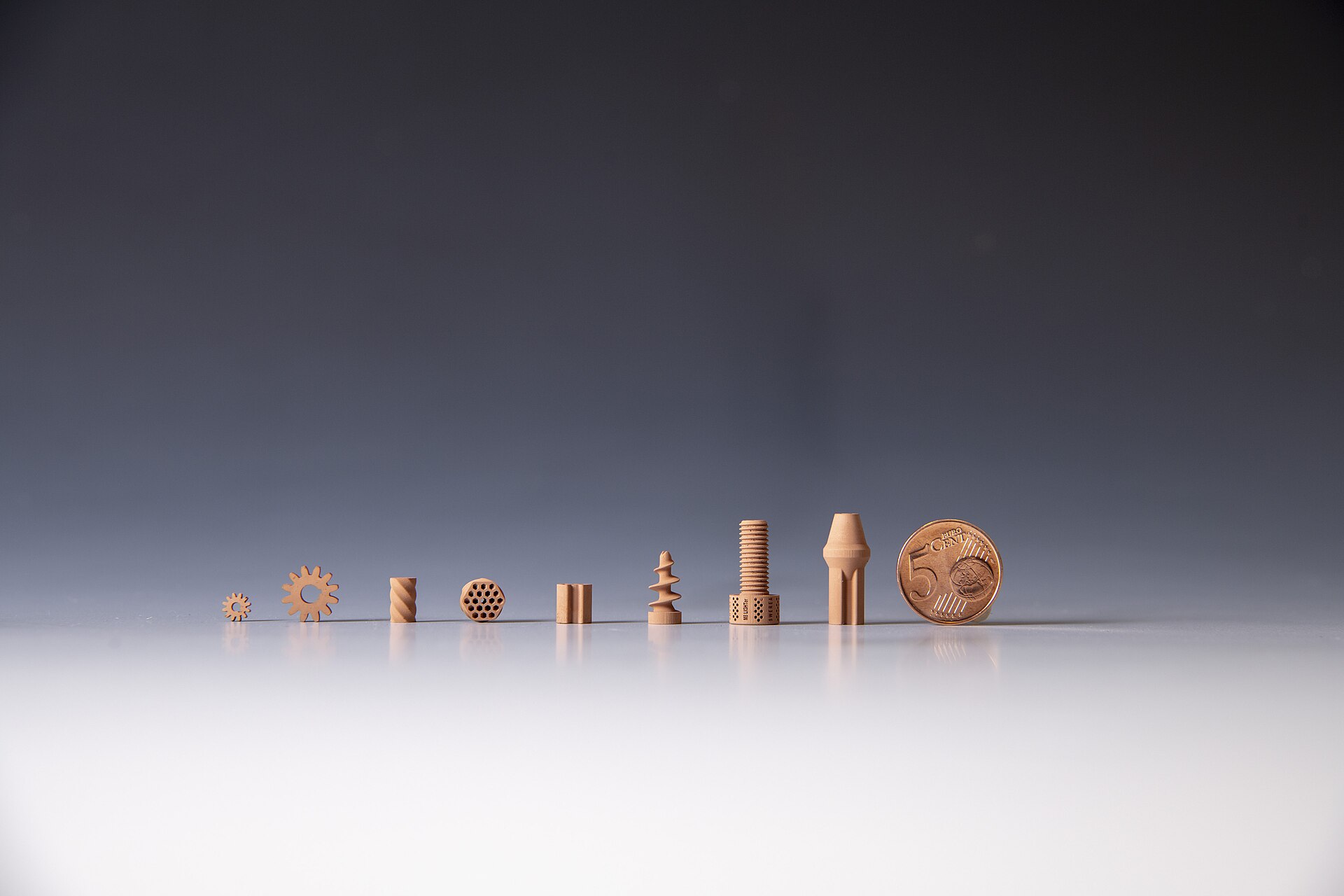
This scenario explores lunar construction, or how we might build on the Moon. Instead of transporting every building material from Earth, we could use Moon dirt, called regolith, to make bricks, roads, and landing surfaces. Maybe we could also use Moon resources to make oxygen and useful metals, helping us build bases with fewer supplies sent from Earth. But engineers would also need to keep abrasive Moon dust outside living areas. And don’t forget to save some Moon dust for the Moon!
How much Moon rock—if any—should people be allowed to dig up for building?
Build a Moon bounce house using cardboard, sponges, paper cups, foil, tape, and other recycled materials. Make the soft, bouncy home first, then surround parts of it with pretend “Moon-dust bricks” made from gray paper or cardboard. Decide which parts should be soft, which should be strong, and how your home protects the people inside.
With an adult, ask ChatGPT:
“Design a bouncy Moon house built partly from materials found on the Moon.”
Use the answer as a starting point, then redesign it your way. Draw the inside and outside, and invent one clever feature that helps people live comfortably without bringing it from Earth.


.png)
.png)