
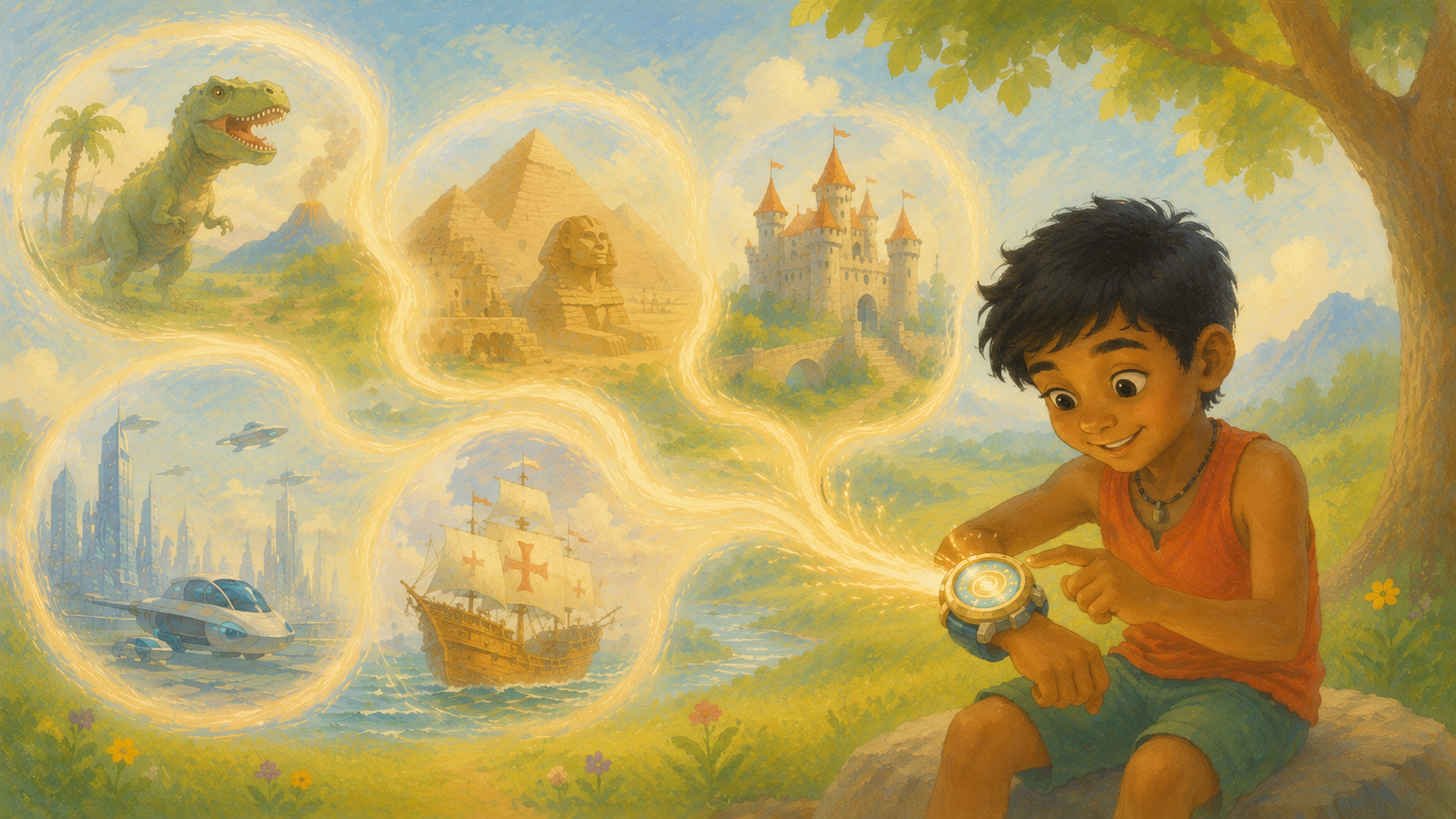
You’ve chosen to imagine a watch that can whisk you into another time. You might want to learn more about immersive media, which makes faraway times and places feel closer. Just don’t lose your watch in the triassic period!
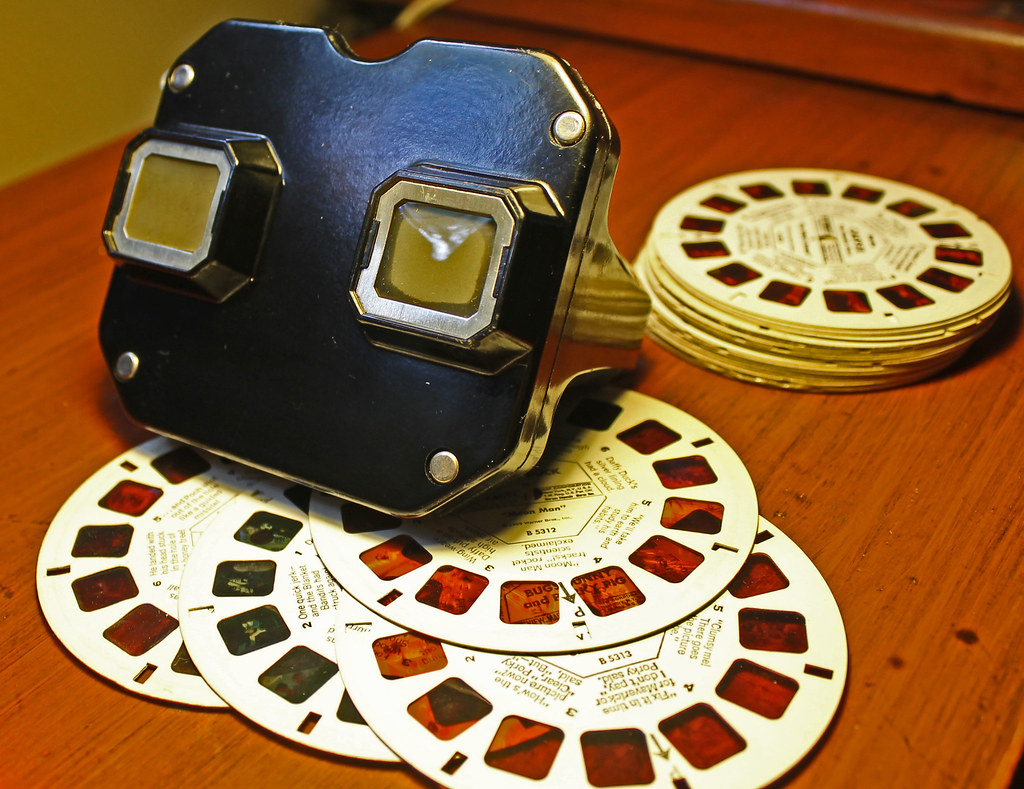
This scenario explores immersive media—technology that can make another place or reconstructed time feel close. Nineteenth-century stereoscopes brought three-dimensional views of distant places into people’s homes. Today, virtual reality can surround viewers with entire digital spaces. Future tools could make exploring another time feel even more real. Just don’t lose your watch in the triassic period!
If we could visit the past through super-realistic media, how could we tell what really happened and what someone added?
Make your own time-travel watch from cardboard, paper, tape, and markers. Add a dial with several times or places you could visit. Pick one, then build a tiny scene showing what your portal would reveal. Try making another version of the same time or place to show how one destination can have many stories.
With an adult, ask ChatGPT:
“My time-travel watch just sent me somewhere in the past. Where did I land?”
Read the answer, then research what that place and time actually looked like. Draw your own portal view and decide what details you would change after your research.
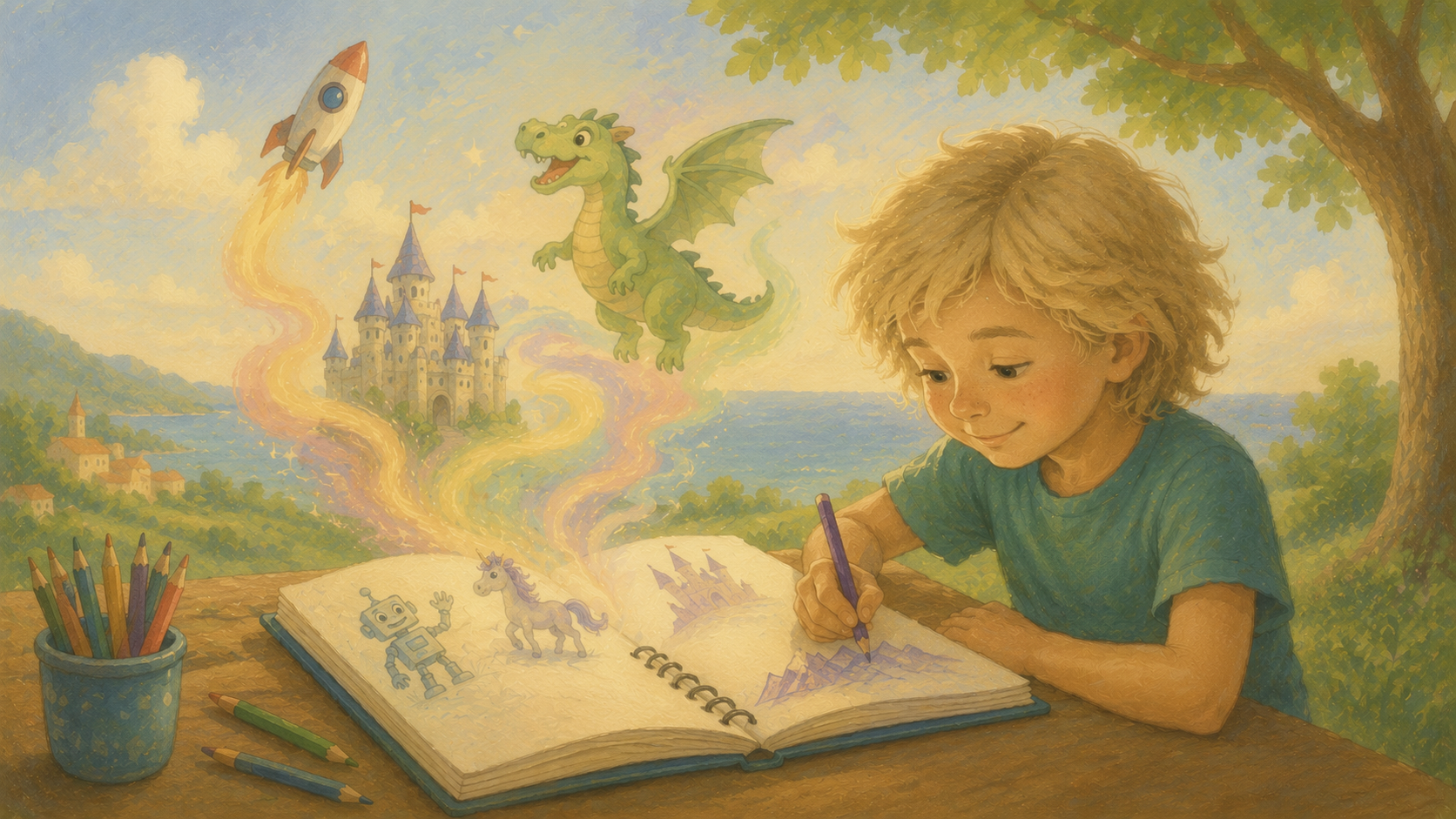
You’ve chosen to imagine a notebook where your drawings can respond and come alive. You might want to learn more about interactive drawing, where computers recognize and react to what we create. But be careful with the magic notebook—you’ll have to feed your notebook dog every day!
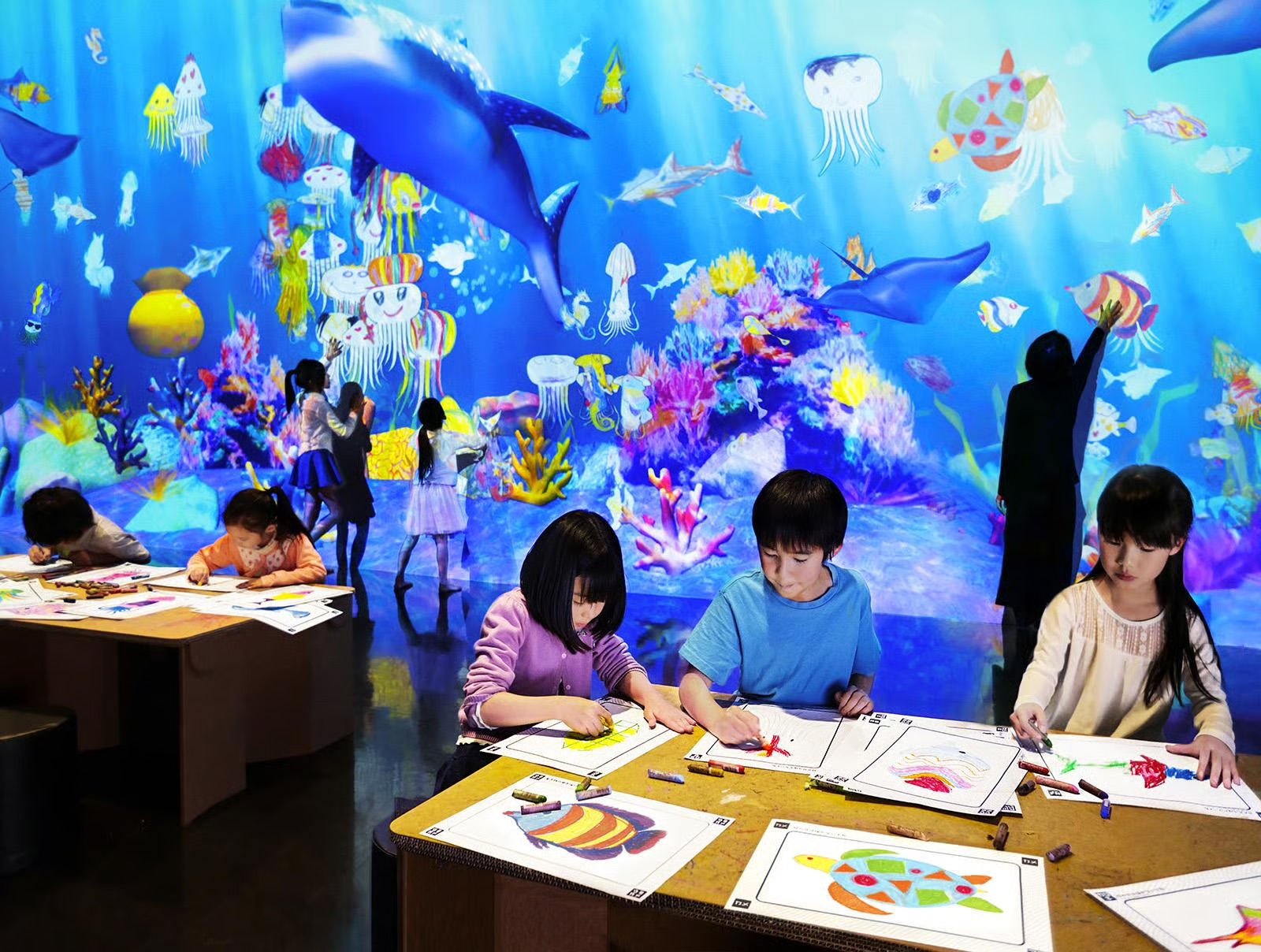
This scenario explores interactive drawing, a foresight concept where our drawings become inputs. A computer can recognize our marks and respond to what we make. Early computer tools already let people change drawings right on a screen. Today, some tools guess doodles or turn drawing into 3D experiences. Future notebooks might respond to our sketches in even more surprising ways. But be careful with the magic notebook—you’ll have to feed your notebook dog every day!
If a notebook could turn your drawings into real things, are there images it should refuse to create?
Make a “magic notebook” with folded paper, cardboard, markers, and craft supplies. Draw an invention on one page, then build a small 3D version using recycled materials. Change your drawing after testing your model, then rebuild it—your notebook gets “smarter” whenever you improve an idea.
With an adult, ask ChatGPT:
“I drew a strange new creature. Ask me five questions to help bring it to life.”
Answer the questions, then use the description to redraw, build, or digitally create your creature. Compare the final version with your first sketch and decide which ideas came from you and which came from the tool.

.png)
.png)