
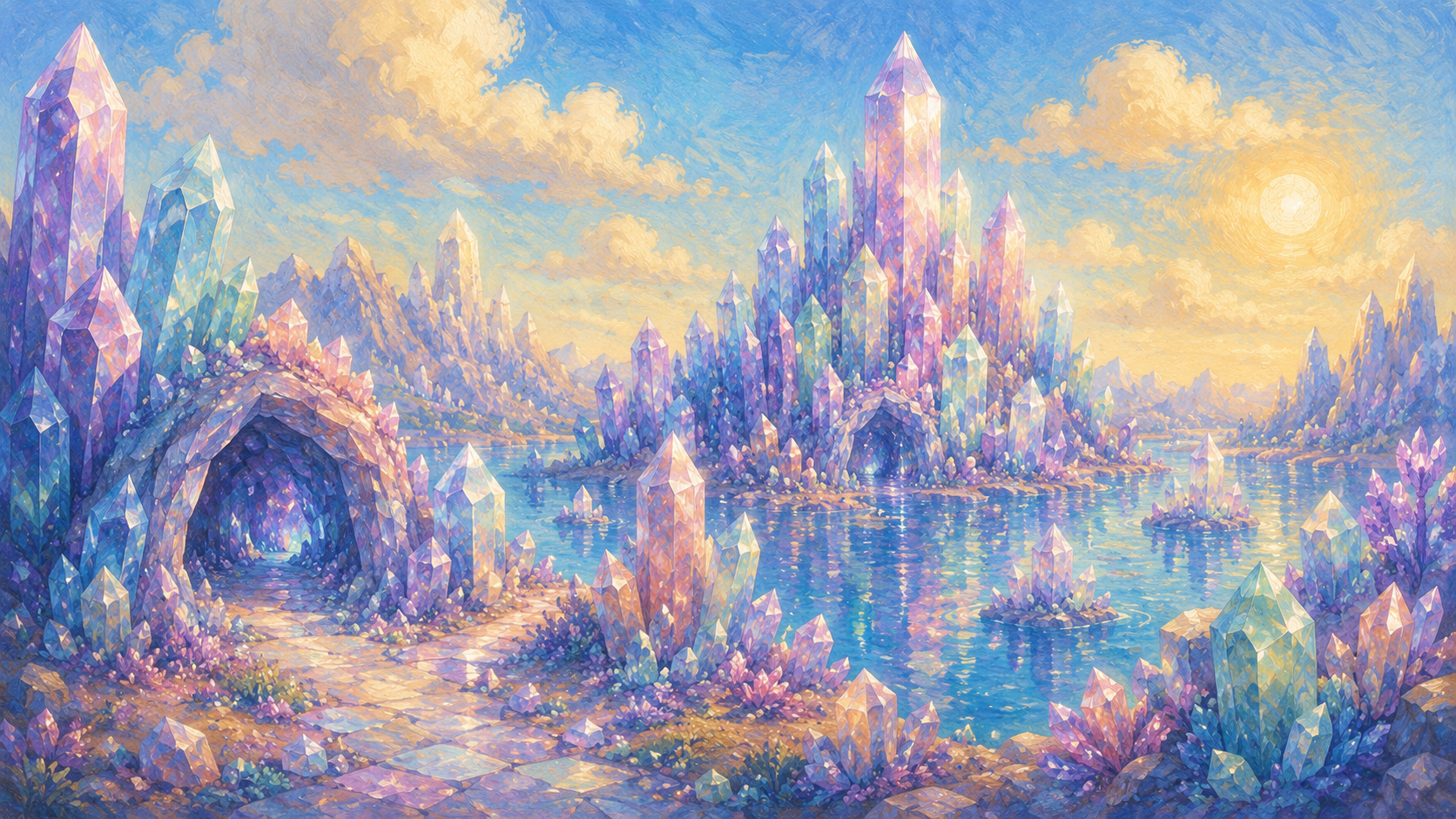
 Crystal Planet
You’ve chosen to imagine exploring a planet covered in sparkling crystals. You might want to learn more about planetary environments, the different atmospheres, surfaces, weather patterns, and materials found on worlds beyond Earth. But look before you pocket a souvenir—the crystal aliens might call that stealing!
This scenario explores planetary environments that transport our imaginations to very different worlds. Scientists study how each world’s air, land, weather, and materials work together. Some distant worlds have clouds containing quartz or silicate particles, while Saturn’s moon Titan has lakes and seas made largely from methane and ethane. These discoveries help us imagine worlds very different from our own. A crystal-covered planet is imaginary, but strange planetary environments are very real. But look before you pocket a souvenir—the crystal aliens might call that stealing!
If we discovered a beautiful crystal world, how could we explore without damaging it?
Use foil, clear plastic, paper, cardboard, and shiny recycled materials to build your own strange planet. Decide where crystals grow and what other landforms surround them. Then invent one creature that could survive there and show how its body fits its environment.
With an adult, ask ChatGPT:
“Imagine three different creatures that could survive on a crystal-covered planet.”
Choose your favorite creature, draw or build it, and decide how it finds food, shelter, and water in its unusual home.
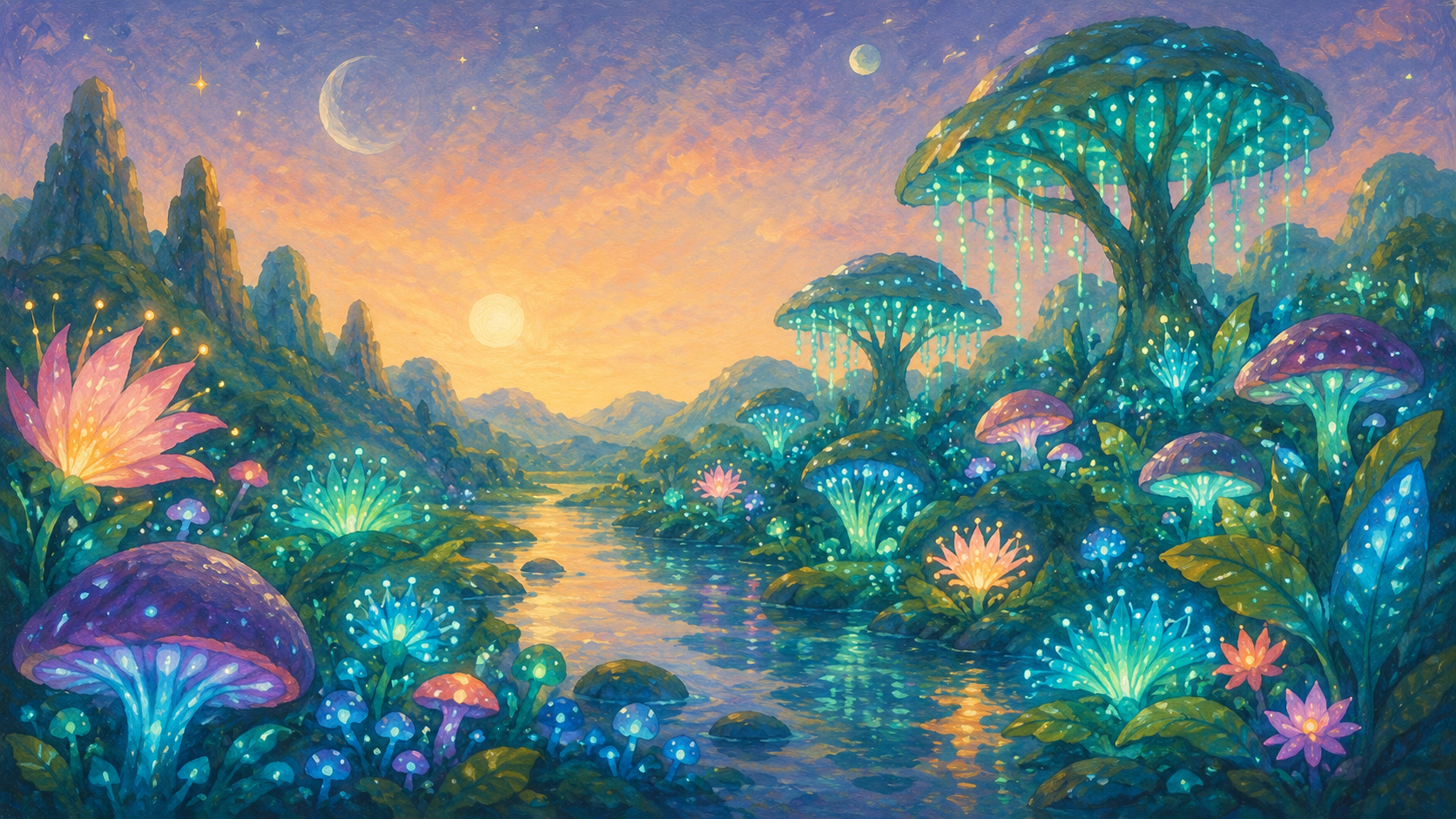 Glowing Planet
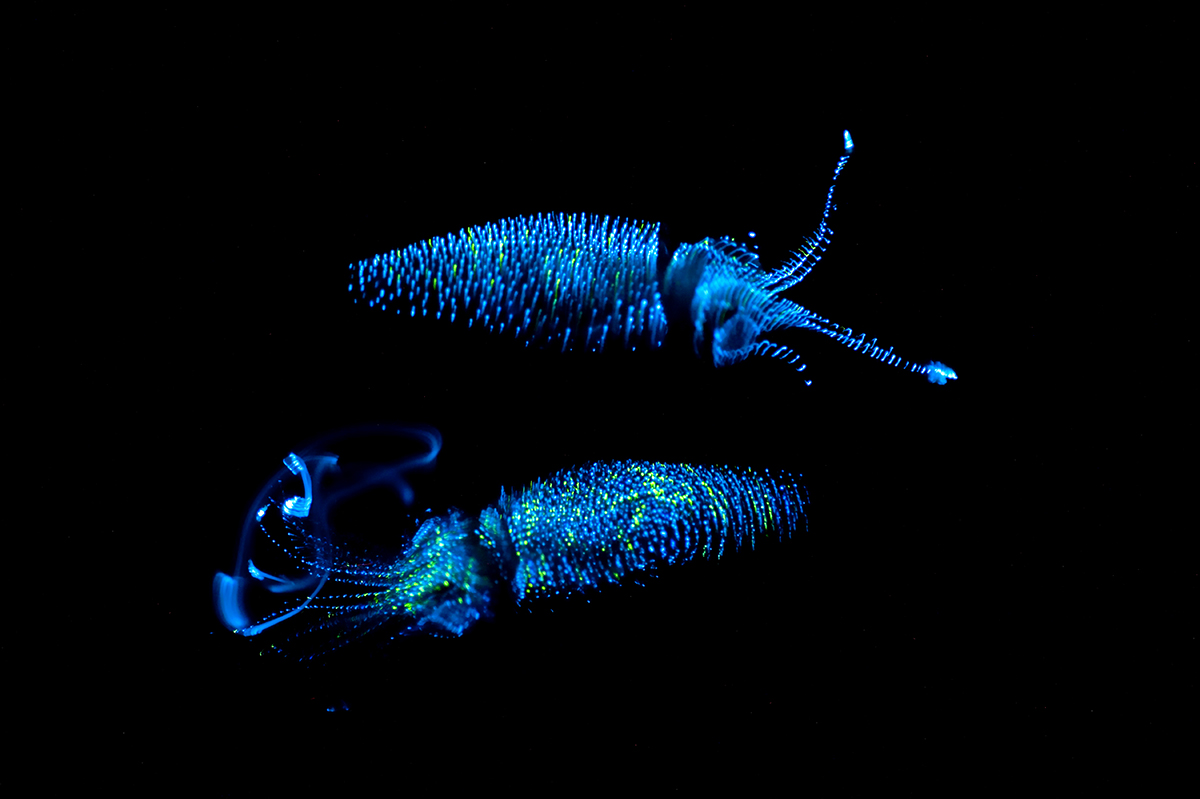
You’ve chosen to imagine exploring a planet where living things glow after dark. You might want to learn more about bioluminescent life, which makes its own light. Bring sunglasses; the local creatures clearly forgot about bedtime!
This scenario explores bioluminescent life made up of glowing creatures. Bioluminescence happens when living things make light through chemical reactions. We find it in fish, squid, jellyfish, algae, and many other organisms. Some use light to find food, communicate, or escape hungry predators. These creatures help us imagine ecosystems filled with their own living lights. Bring sunglasses; the local creatures clearly forgot about bedtime!
If many creatures used light to survive, what might happen if people added bright lights to their world?
Use dark paper, cardboard, tissue paper, and bright crayons or glow-in-the-dark art supplies to build a nighttime alien ecosystem. Invent several glowing life-forms and give each glow a purpose. Maybe one uses light to hide while another uses it to find food.
With an adult, ask ChatGPT:
“Invent a glowing alien ecosystem inspired by real bioluminescent sea creatures.”
Choose one creature from the answer and redesign it your way. Draw or build it, then show what its light helps it do.

.png)
.png)