
 Time Travel Theme Park
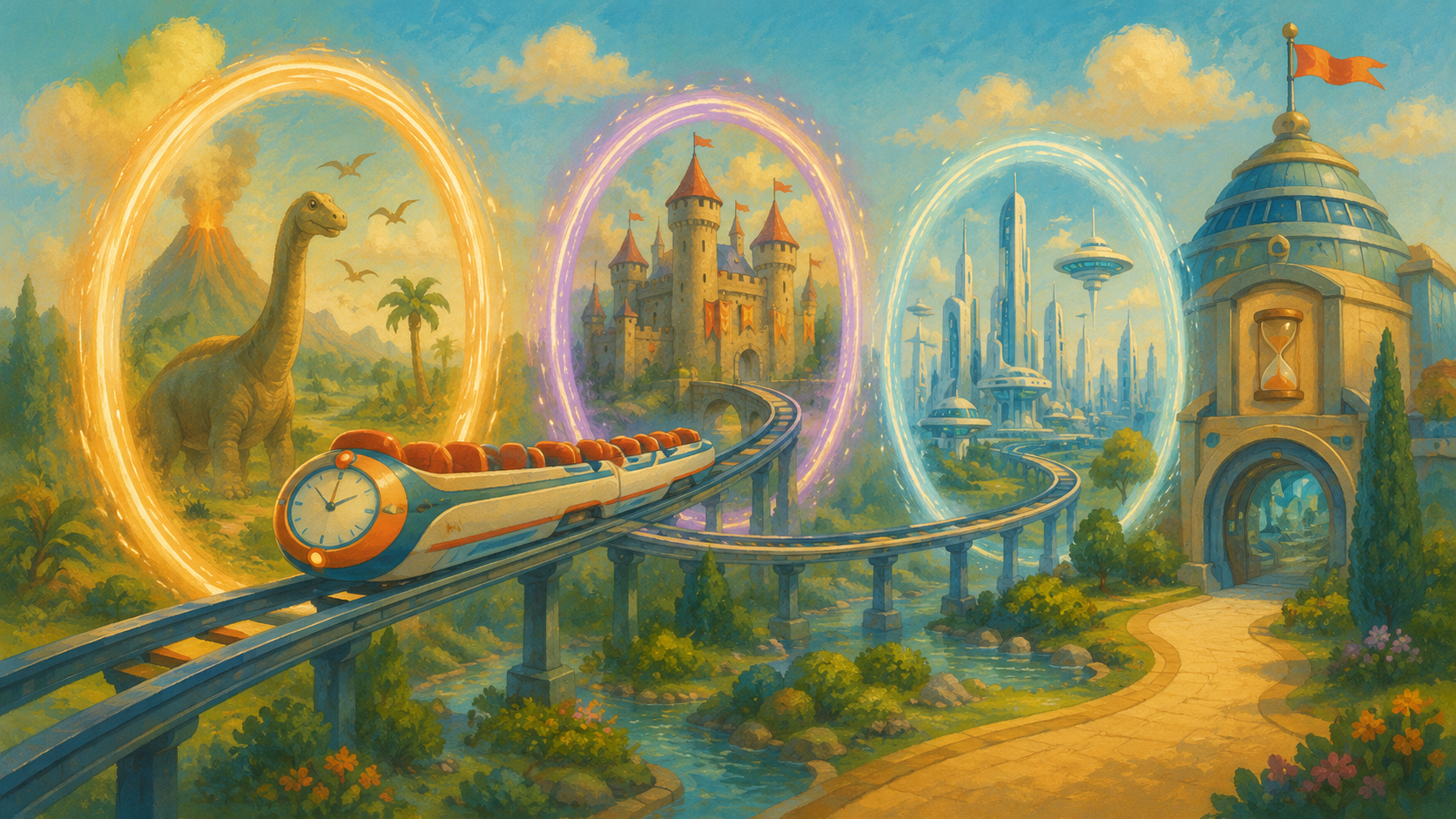
You’ve chosen to imagine a theme park where every ride takes you to a different time in history. You might want to learn more about immersive simulation, a real-world technology that uses virtual reality and sensory design to recreate moments from the past. Just remember—before you shout “Let’s go see the dinosaurs!”—check if your time pod comes with a return button.
This scenario explores immersive historical simulation, a foresight concept rooted in experiential learning and virtual reality design. These systems help people understand history by walking through lifelike, sensory environments—like VR classrooms or interactive theme parks. The idea connects creativity, technology, and empathy by letting us “step into” the past to see how people lived. From Roman reenactments to today’s VR heritage projects, this trend reflects the human desire to experience rather than just observe history. Just remember—before anyone shouts “Let’s go see the dinosaurs!”—check if the time pod has a return button.
If you could visit any moment in history safely, which would you choose—and what might you learn from it?
Make a “mini time portal” using cardboard, colored cellophane, and flashlights to represent different eras. You can decorate each section with drawings of what you'd see in that time.
With an adult, ask ChatGPT:
“Describe what it would look, sound, and smell like to visit ancient Egypt for one hour.”
You can use the response to draw or design your own VR park attraction scene.
 Holographic History Museum
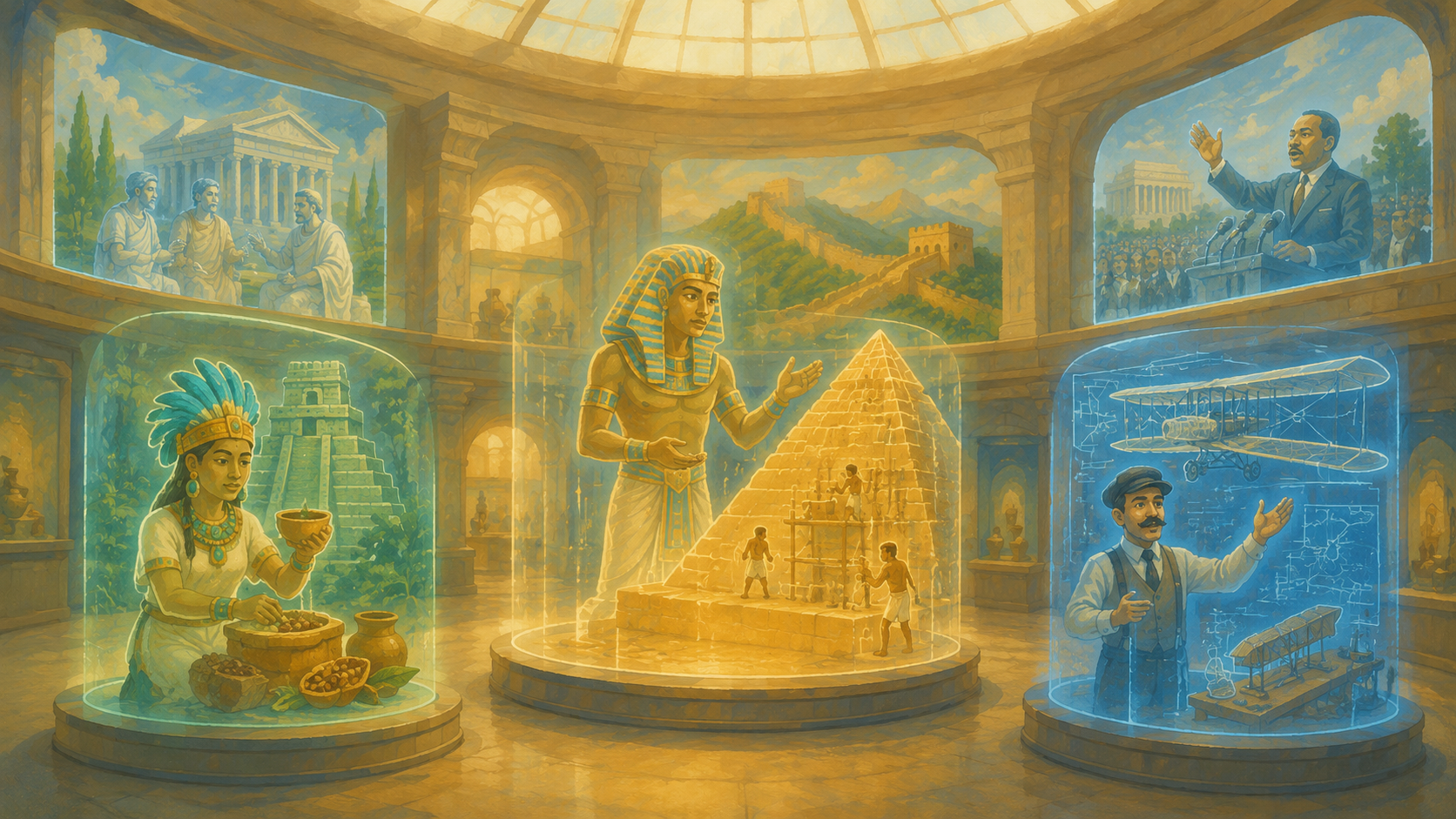
You’ve chosen to imagine a museum where holograms bring history to life and guide you through the past. You might want to learn more about augmented reality (AR)—a real technology that layers digital images and sounds over real-world spaces to teach and explore. Just be sure your holographic tour guide doesn’t start correcting your history homework!
This scenario highlights augmented reality learning environments, a foresight concept that merges education, technology, and empathy. AR lets us step into virtual layers of the past while remaining grounded in the present, encouraging deeper understanding through interactivity. Museums and classrooms worldwide now use AR to enhance storytelling, helping us “meet” historical figures or explore faraway places. From 19th-century stage illusions to today’s holographic tours, the goal remains the same: to make learning come alive. Just be sure your holographic tour guide doesn’t start correcting your history homework!
How could holograms help more people experience history who can’t visit museums in person?
Create a “mini hologram display” using a clear plastic sheet (like a CD case) and a tablet or phone to reflect a simple 3D image. You can display a spinning globe or historic figure!
With an adult, ask ChatGPT:
“Imagine a museum where holograms tell you stories from their time—what would one character say to you?”
You can write or record a short script for your holographic guide.


.png)
.png)