
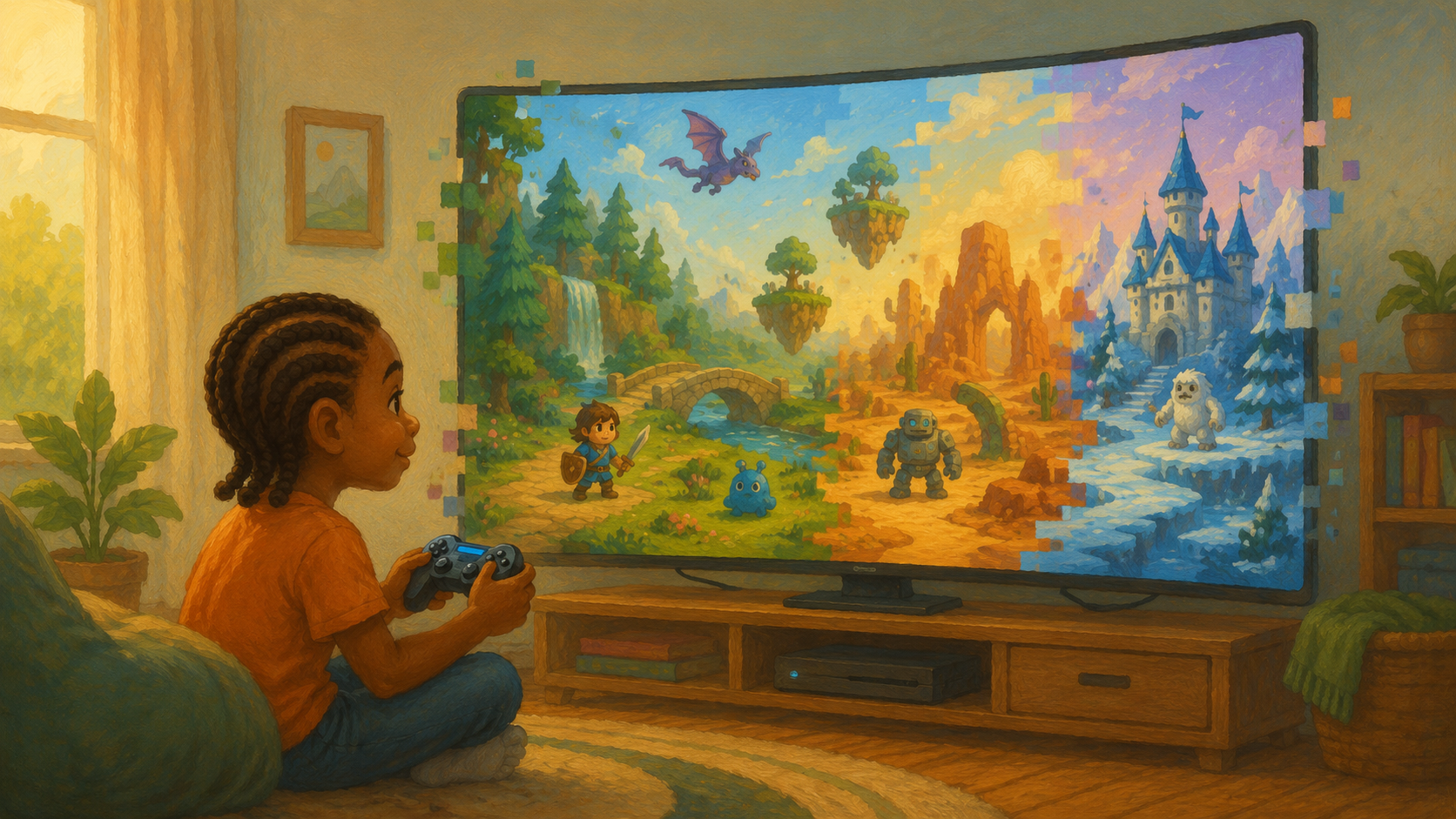
You’ve chosen to imagine a video game that changes its challenge as you play. You might want to learn more about adaptive games, which can respond to how well you’re playing. Just don't get too good—or your game might decide it's time to unleash the mega-boss!
This scenario explores adaptive games, games that can change their challenge or experience based on the player. A game might notice how someone is playing and adjust things like the difficulty, available help, or what happens next. This can create experiences that work differently for different players instead of giving everyone exactly the same game. A future game could take this idea even further, changing parts of itself each time you play based on what you do. Just don't get too good—or your game might decide it's time to unleash the mega-boss!
Should a game change its challenge automatically, or should players always choose?
Create an adaptive game using paper, blocks, cups, or other classroom materials. Make three versions of one challenge: easy, medium, and tricky. Ask someone to play, then change the next round based on how they did. You are now the game’s adaptation system!
With an adult, ask ChatGPT:
“Create a simple adventure game that gets harder when I succeed.”
Play several rounds and notice what changes. Then redesign one rule so the game adapts in a different way.
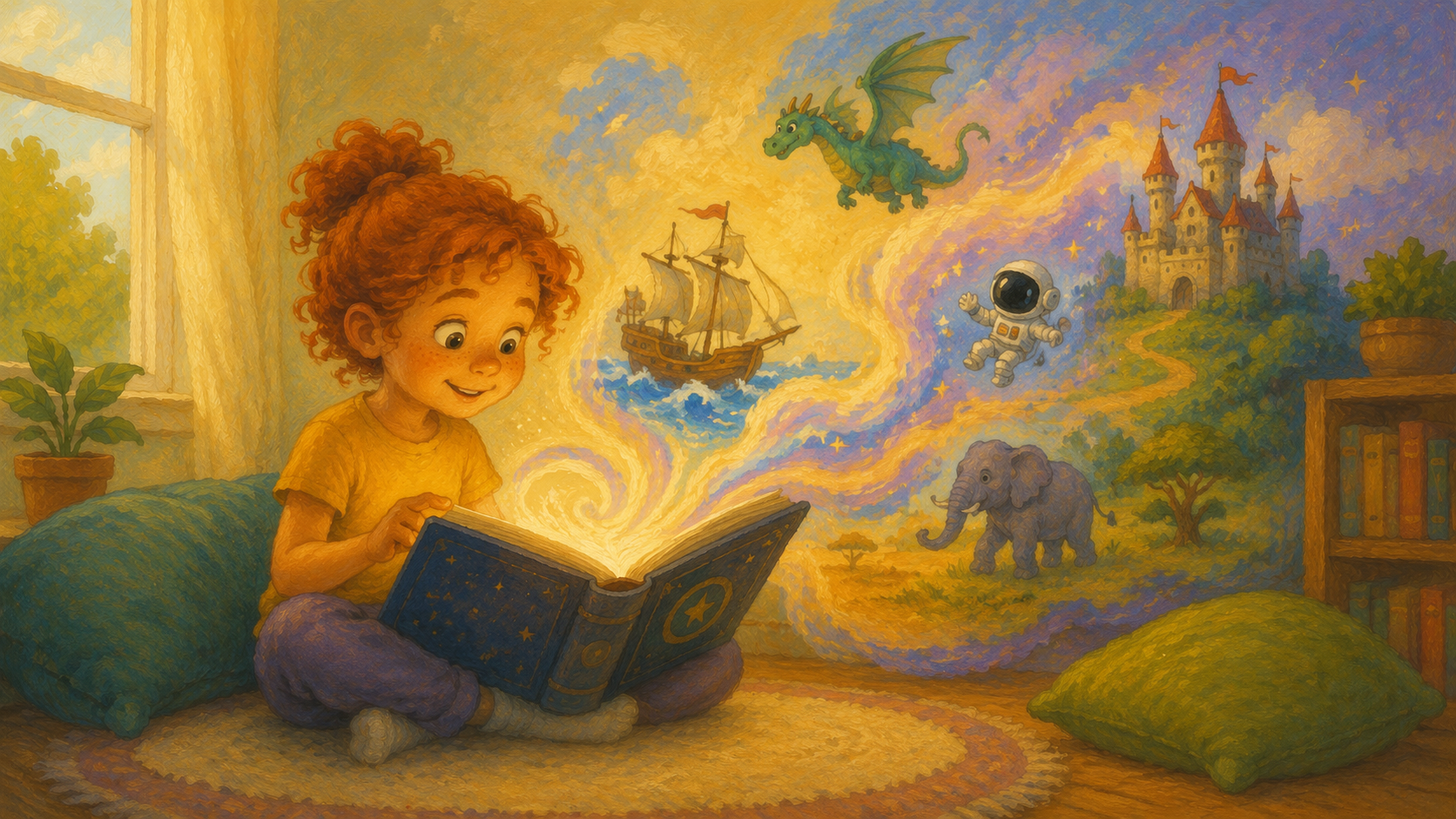
You’ve chosen to imagine a book that creates a new story every time you read it. You might want to learn more about generative stories, where computer tools can create new parts while we interact with them. But if you get to help write the story, don't go complaining to the author about the ending!
This scenario explores generative storytelling, stories in which parts of the narrative can be created or rearranged as the experience unfolds. Instead of every word and event being locked into one order, a generative story can use rules, reader choices, or digital systems to produce different characters, events, paths, or endings. This could give readers a more active role in shaping stories and make rereading the same story feel different each time. A book that creates a new adventure whenever you open it takes that idea to an extreme: the story itself keeps changing. But if you get to help write the story, don't go complaining to the author about the ending!
If a computer helps create a story, how should people share control with it?
Make a never-the-same storybook from folded paper. Start with one opening page, then create several character, place, problem, and ending cards. Each time someone reads your book, they pick different cards and build a new story. Add more cards whenever you think of new possibilities.
With an adult, ask ChatGPT:
“Start a kid-friendly story and give me three choices after each part.”
Pick a choice and keep reading. Then restart with different choices and compare the two stories. Draw your favorite moment from each version.

.png)
.png)