
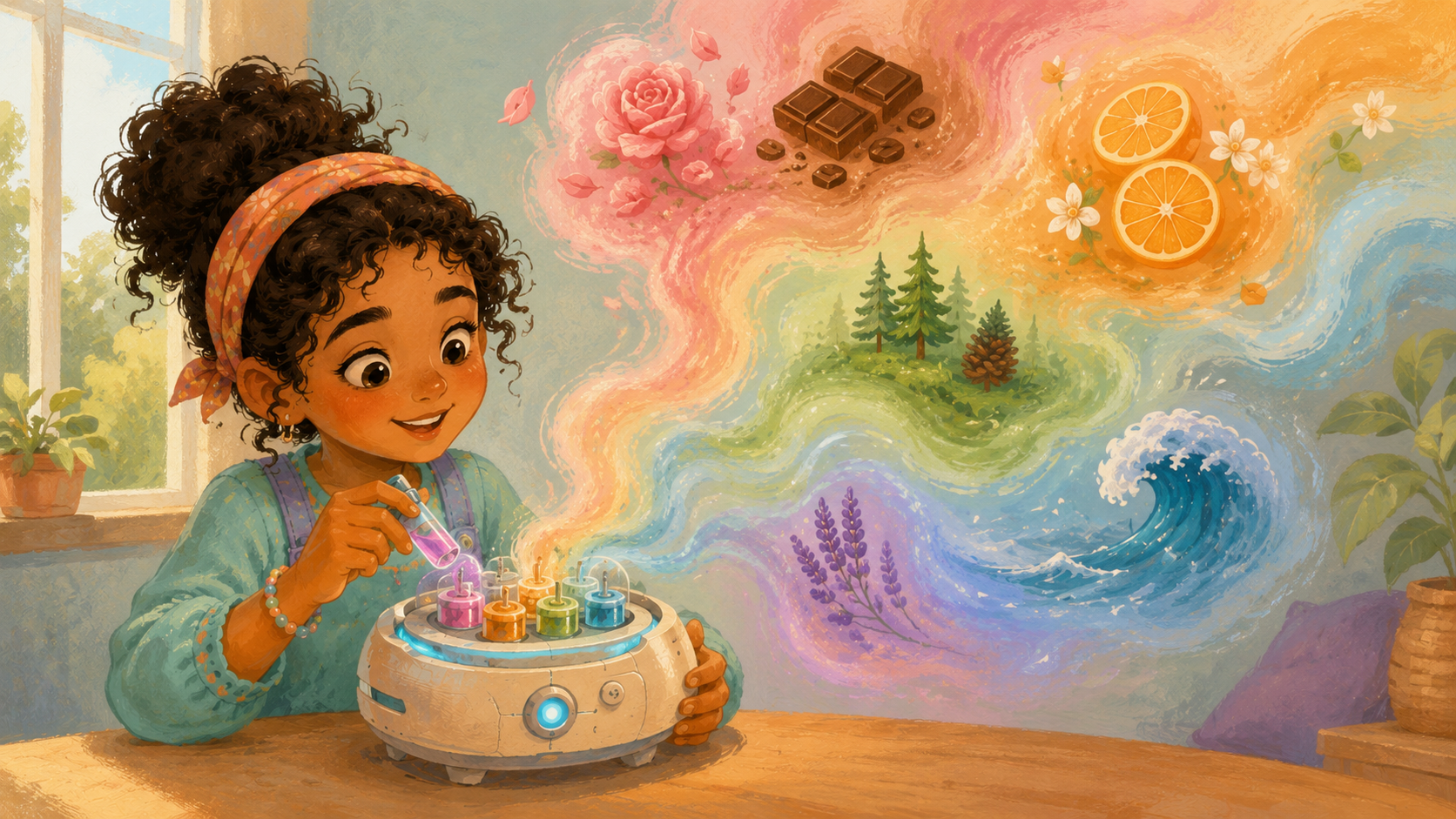
You’ve chosen to imagine a toy that lets you mix brand-new smells. You might want to learn more about smell and the brain, or how scents connect with our memories and feelings. But remember, just because you like the smell of rotten fruit, doesn’t mean everyone else does!
This scenario explores smell and the brain, especially our amazing smell—or olfactory—system. Smell sensors inside our noses send messages to brain networks closely connected with feelings and memories. New devices can already mix and release scents during digital experiences, and future toys might let us invent smells like we mix colors. But remember, just because you like the smell of rotten fruit, doesn’t mean everyone else does!
What three smells would you combine to invent a brand-new scent?
Make a pretend smell-mixing machine with cardboard, bottle caps, paper, and markers. Create several “scent buttons” for smells like lemon, rain, popcorn, or pine trees. Combine two or three buttons and invent a name for the new smell. You can even draw what the smell reminds you of.
With an adult, ask ChatGPT:
“Mix three familiar smells and invent a strange new scent for a future toy.”
Choose your favorite result, then change it however you want. Draw the smell mixer, invent its scent cartridges, or build a model showing how kids control their creations.
 Future Fidget
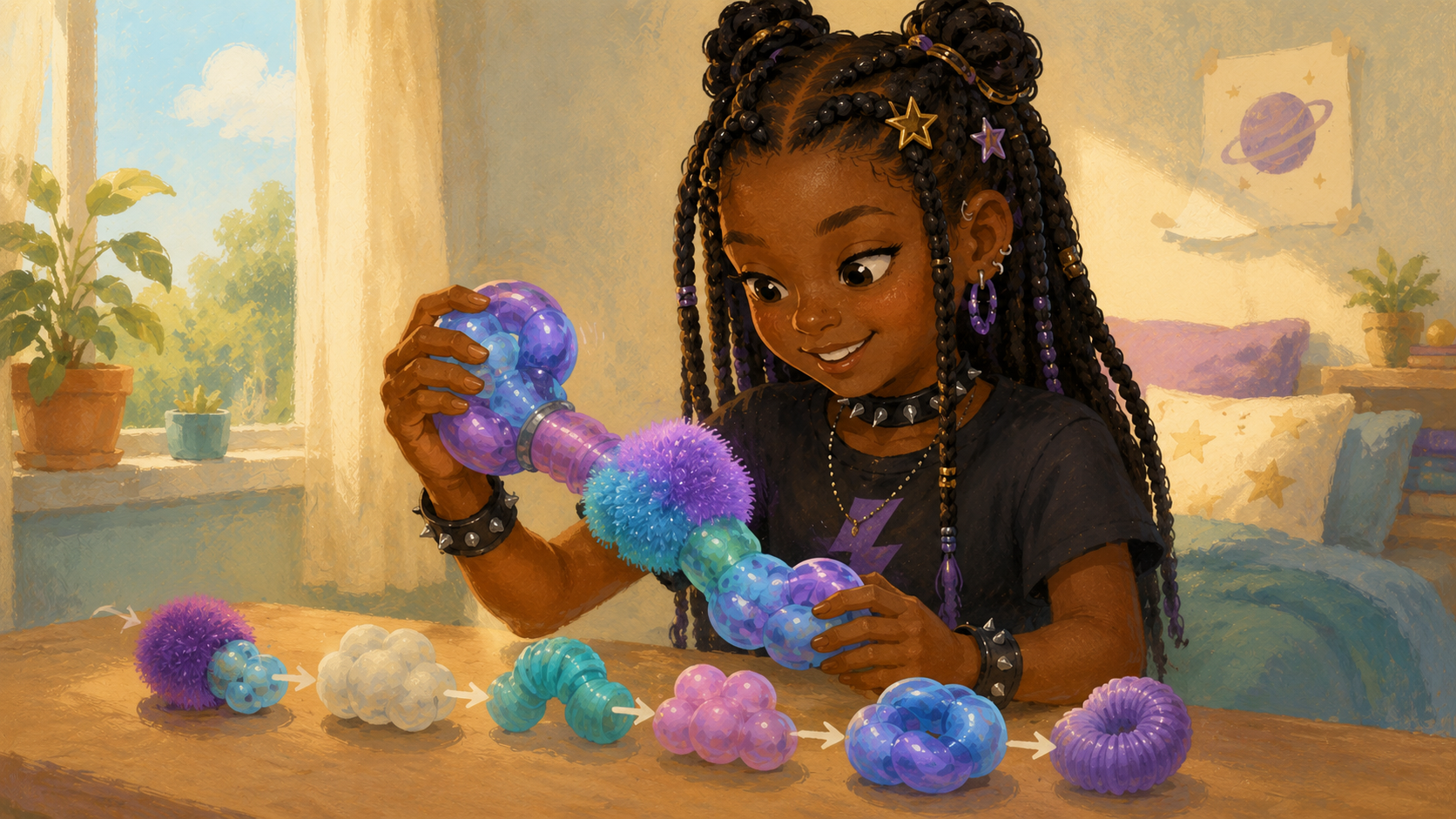
You’ve chosen to imagine a fidget that changes shape, texture, and movement while you play. You might want to learn more about shape-changing materials: materials designed to bend, fold, stretch, or transform. Just make sure your fidget has no surprise cactus mode!
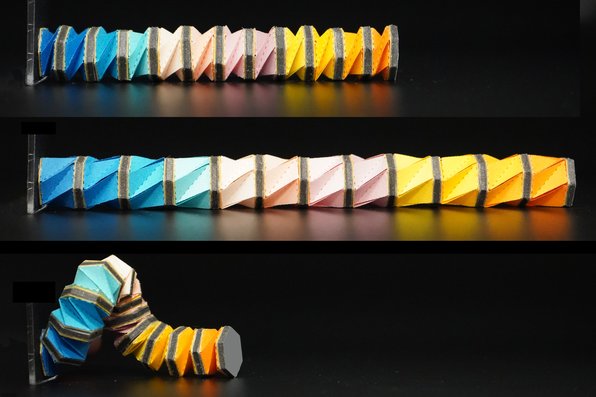
This scenario explores shape-changing materials, which can transform after receiving a signal. Some bend with heat, while others respond to magnets or electricity. Engineers use these ideas to build soft robots and moving materials, and some pieces can even rearrange themselves into completely different shapes. Future toys could become squishy, twisty, bumpy, or smooth as we play. Just make sure your fidget has no surprise cactus mode!
How could one fidget work well for people who enjoy different textures and movements?
Make your own transforming fidget using cardboard strips, paper, tape, string, and paper fasteners. Connect several pieces so they can fold, spin, bend, or flip into different forms. Try making at least three shapes from the same pieces, then redesign any joints that get stuck.
With an adult, ask ChatGPT:
“Invent a fidget toy that can change into five different shapes and textures.”
Pick the transformations you like best and replace any you do not. Draw each stage like a transformation guide, or build a model that changes between several of your designs.

.png)
.png)