

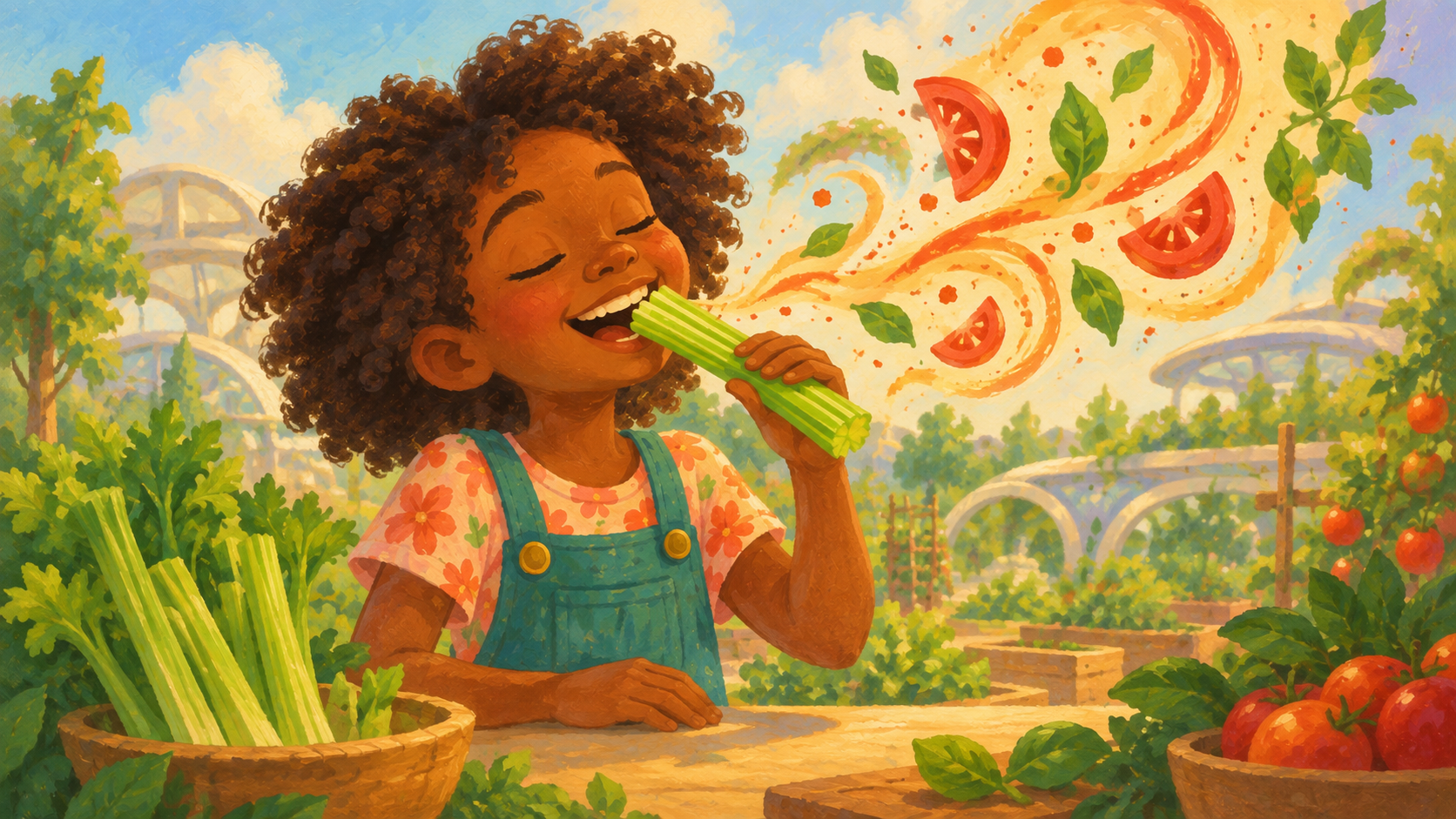
You’ve chosen to imagine a world where celery doesn’t just taste fresh and crunchy—it tastes like a slice of cheesy pizza! You might want to learn more about flavor engineering, where scientists safely recreate flavors using natural ingredients and plant-based chemistry. But don’t worry—you’ll still have that classic celery crunch (just with a surprise pepperoni zing!).
We’re exploring flavor engineering—a real field that combines chemistry, food science, and creativity to make healthy foods taste amazing. Researchers are using natural compounds from plants to mimic popular flavors, helping people eat more fruits and vegetables without extra salt, sugar, or fat. This science could help make sustainable diets—or even celery!—more exciting and accessible for everyone. But don’t worry—you’ll still have that classic celery crunch (just with a surprise pepperoni zing!).
If scientists can change how vegetables taste, how might that change the way people eat?
Pretend you’re a food scientist! Use paper, clay, or recyclables to design your own “Flavor Machine” that can turn any vegetable into a new flavor. Label the buttons and describe what each one does.
With an adult, ask ChatGPT:
“Invent a vegetable that tastes like my favorite food. What would it look like and how would it grow?”
Then, draw or build your invention from the description!
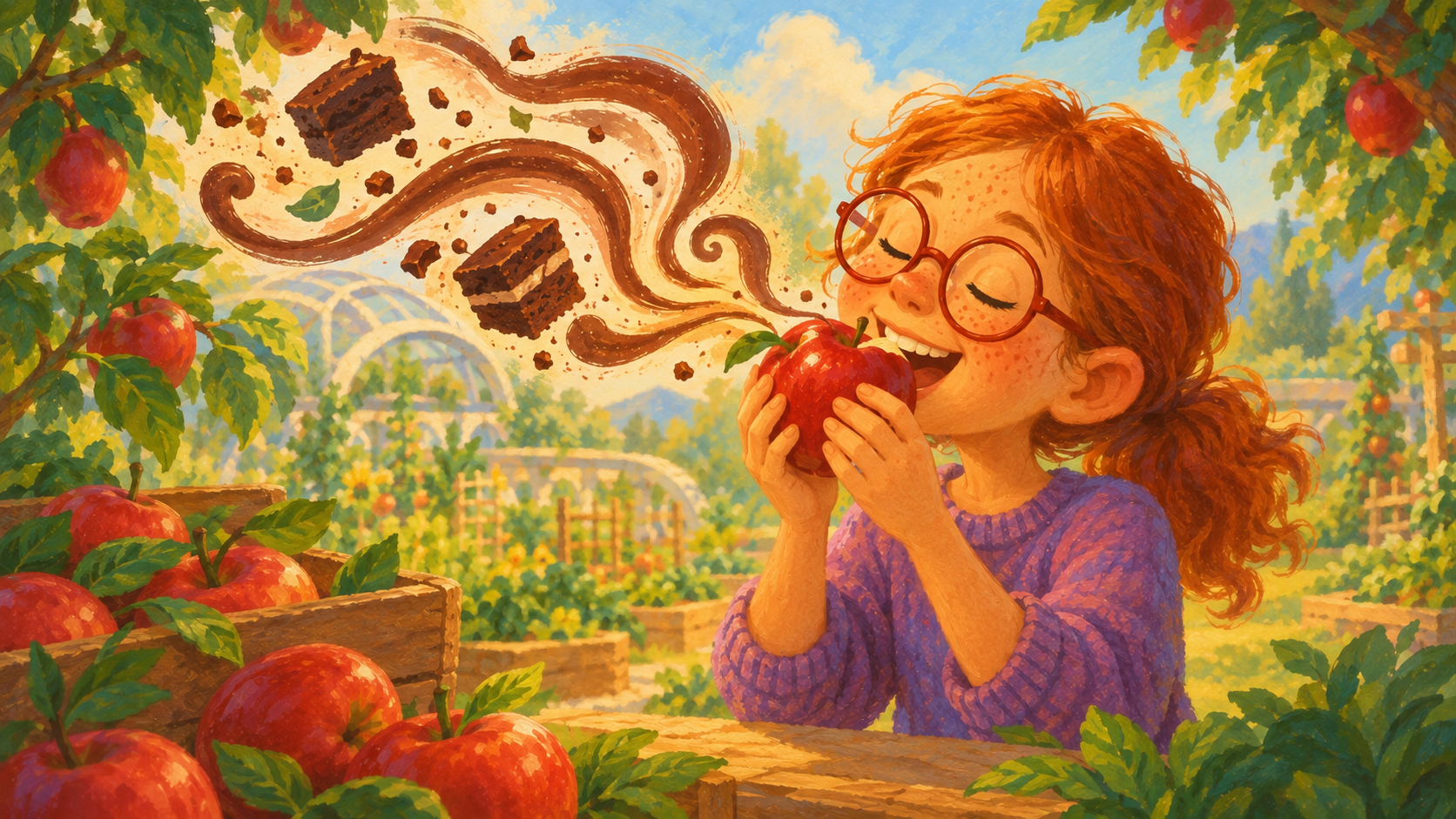
You’ve chosen to imagine a world where every apple tastes like chocolate cake! You might want to learn more about synthetic biology in food, where scientists use safe, natural genetic tools to enhance flavor, color, or nutrition in crops. Bonus: chocolate compounds might even keep bugs away, so farmers could grow healthier fruit using fewer pesticides!
We’re learning about synthetic biology in food, a growing field that uses safe genetic science to improve crops and reduce waste. Researchers are exploring how natural plant genes control flavor and smell, and how those genes can be used to make food healthier and more sustainable. From flavor-boosted strawberries to pink pineapples, synthetic biology shows how we can use nature’s own code to solve problems in farming and nutrition. Bonus: chocolate compounds might even keep bugs away, so farmers could grow healthier fruit using fewer pesticides!
If we can change how foods taste or grow using science, what rules should help us make those choices responsibly?
Create your own “Future Orchard” using paper or recycled materials. Design trees that grow fruit with special flavors—like chocolate apples or strawberry bananas—and label how each one helps the planet.
With an adult, ask ChatGPT:
“Describe a futuristic orchard where every tree grows a different dessert-flavored fruit.”
Use its response to draw or digitally paint your own imaginative farm of the future!


.png)
.png)