
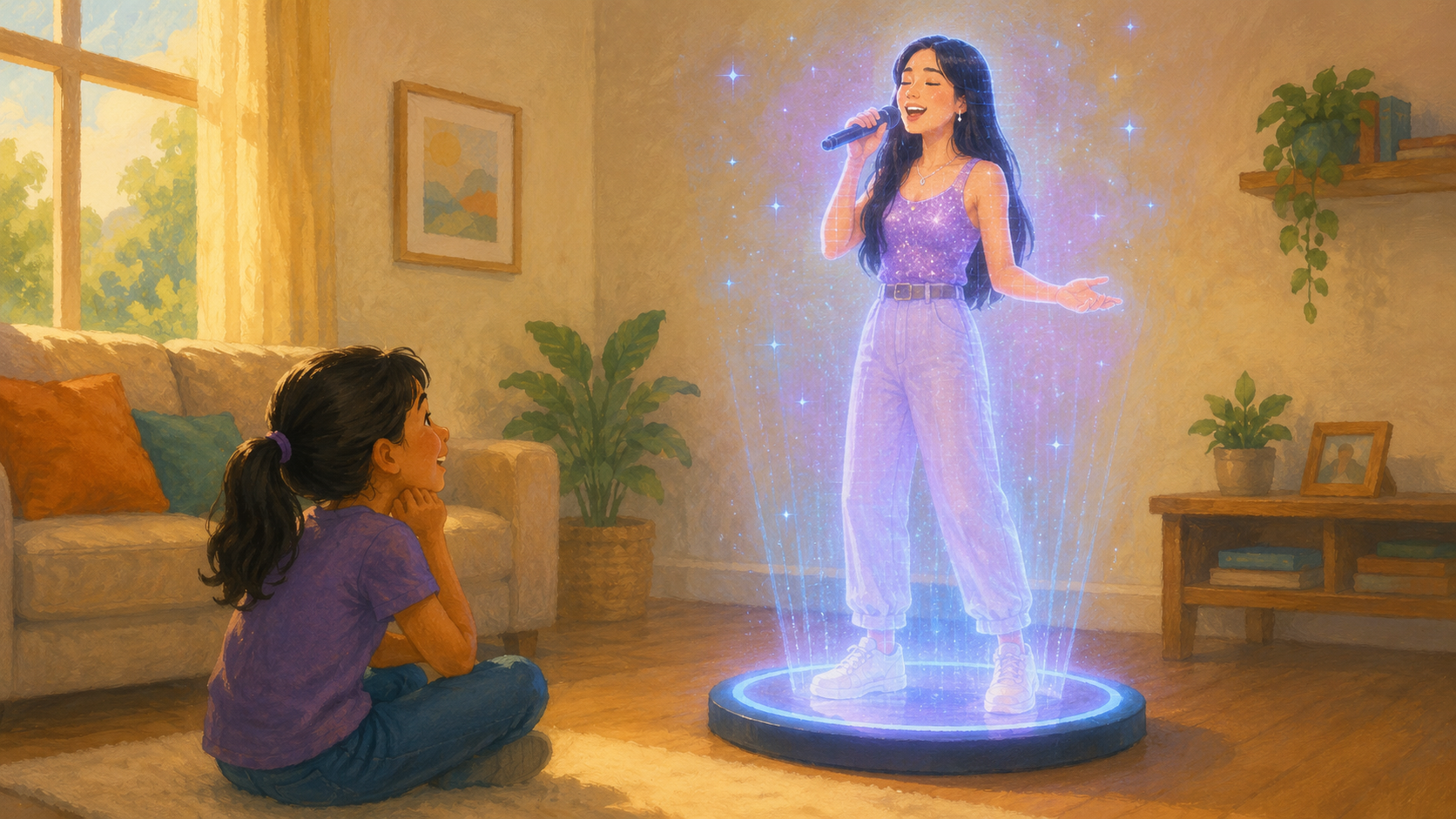
You’ve chosen to imagine your favorite artist appearing life-sized right in your living room. You might want to learn more about digital and holographic performances, which use projected images, reflections, screens, and other visual technologies to make performers seem present. Just don’t try to give your favorite artist a hug; you may crash into your living room wall!
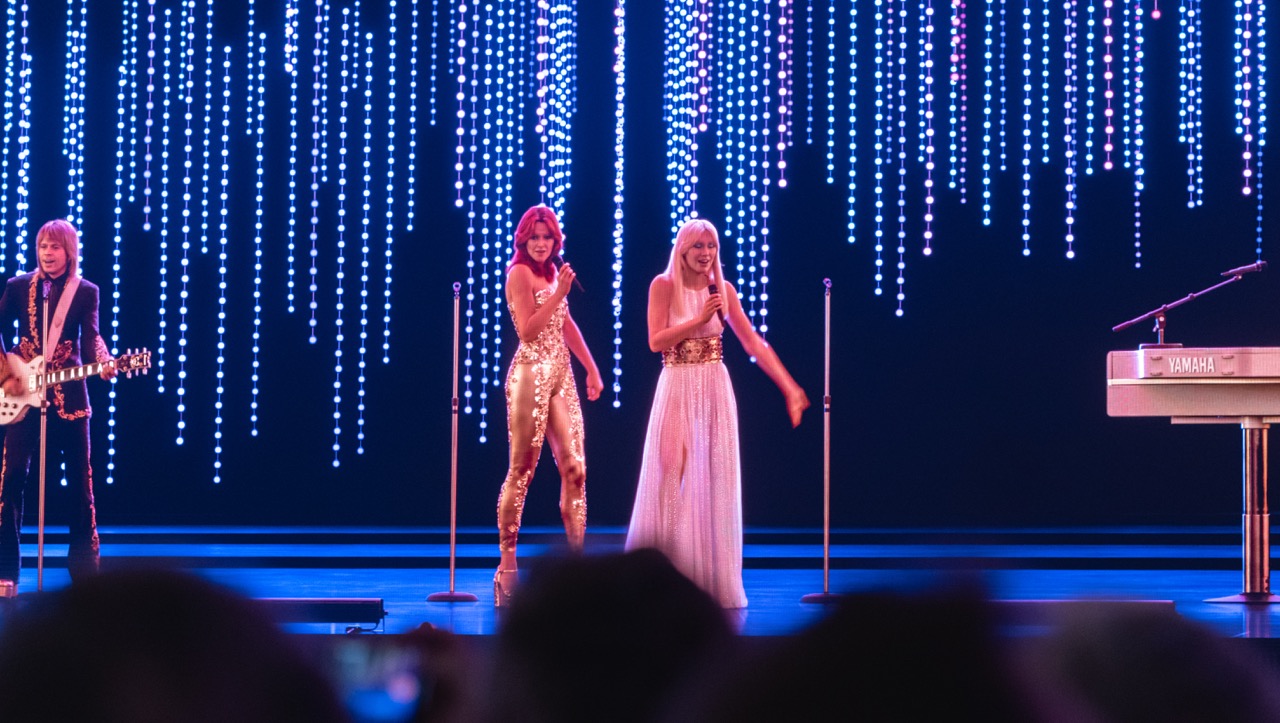
This scenario explores holographic performances, which use technologies such as screens, projections, reflections, computer-generated images, and motion capture to make performers seem present in a physical space. Reflection illusions have amazed theater audiences since the 1860s, and modern productions can place digital performers onstage beside live musicians. Future systems could bring similar experiences into homes, but they would also raise questions about who may create, control, or profit from an artist’s digital likeness. And don’t try to give your favorite artist a hug; you may crash into your living room wall!
If someone makes a digital version of a performer, who should decide what it can do?
You can design a tiny hologram concert stage using cardboard, clear plastic, paper, and art supplies. Create a performer, stage, and audience, then experiment with clear plastic to see how reflections can make images appear in surprising places. Change your design until your performer gets the best “stage entrance.”
With an adult, ask ChatGPT:
“Design a hologram concert that could happen in my living room.”
Choose your favorite idea, then draw the stage and decide where the digital performer, audience, speakers, and lights would go.
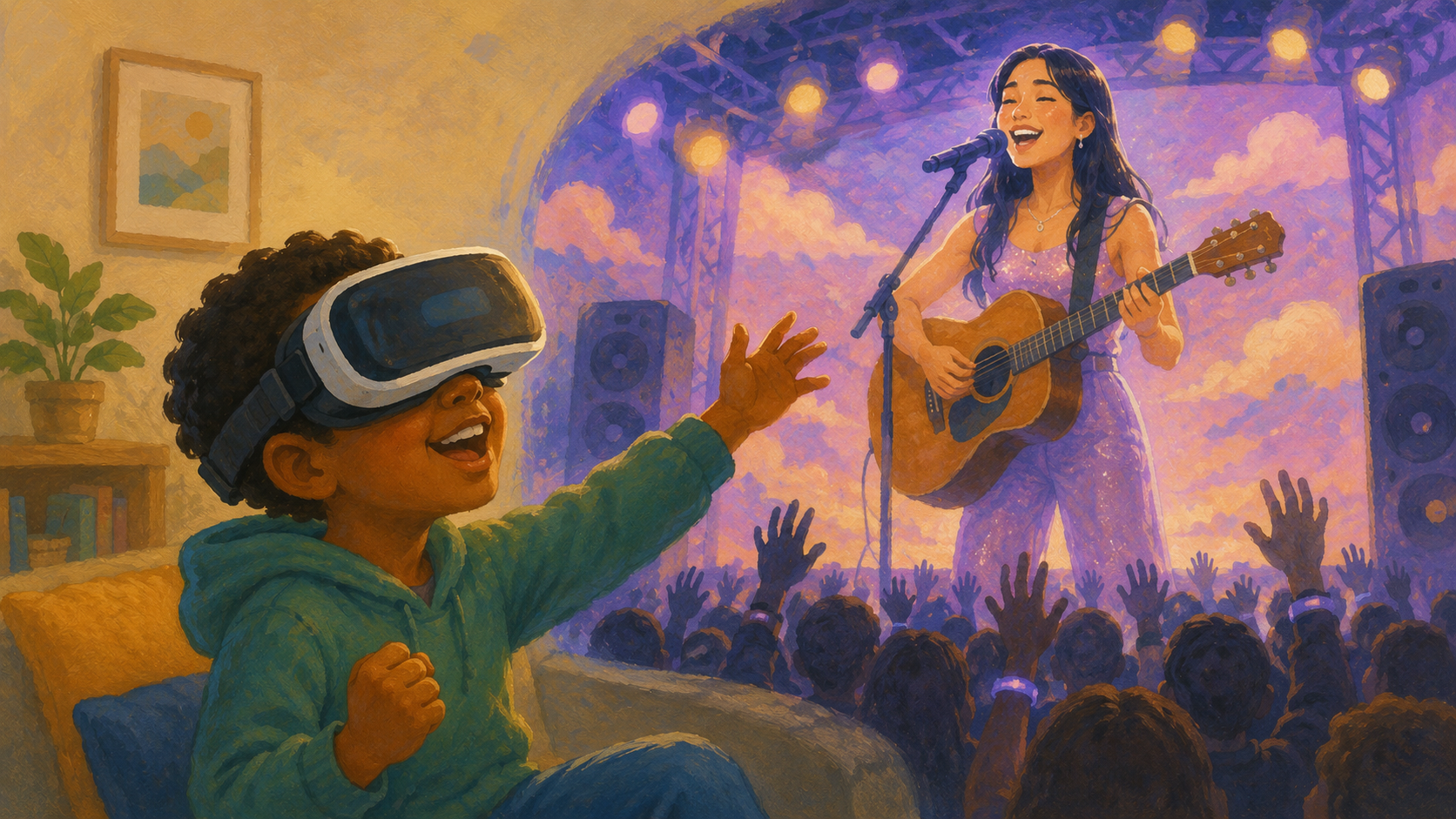
You’ve chosen to imagine putting on a VR headset and suddenly standing front row at your favorite artist’s concert. You might want to learn more about immersive concerts, which use virtual reality, spatial sound, and specially positioned cameras to make faraway performances feel close. Just remember to take off your headset if you need to use the bathroom in the middle of the concert!
This scenario explores immersive concerts. A VR headset can surround us with a computer-generated environment or immersive video recorded with special cameras. Spatial audio can also make sounds seem to come from different locations around us. Artists are already creating performances specifically for headsets, and future concerts might let viewers choose among several extraordinary viewpoints. Just remember to take off your headset if you need to use the bathroom in the middle of the concert!
If anyone could get a virtual front-row seat, how might that change who gets to experience concerts?
You can invent your own VR concert viewer using a small cardboard box, paper, tape, and markers. Cut a viewing window, then design interchangeable concert scenes that slide inside. Test different views—front row, beside the drummer, or even above the stage—and decide which makes you feel most involved.
With an adult, ask ChatGPT:
“Imagine five places I could stand during a future VR concert.”
Pick your favorite viewpoint and draw what you would see, hear, and notice from there. Then invent another viewpoint no real concert ticket could offer.


.png)
.png)